Nobel Center
Stockholm, Sweden
2020–
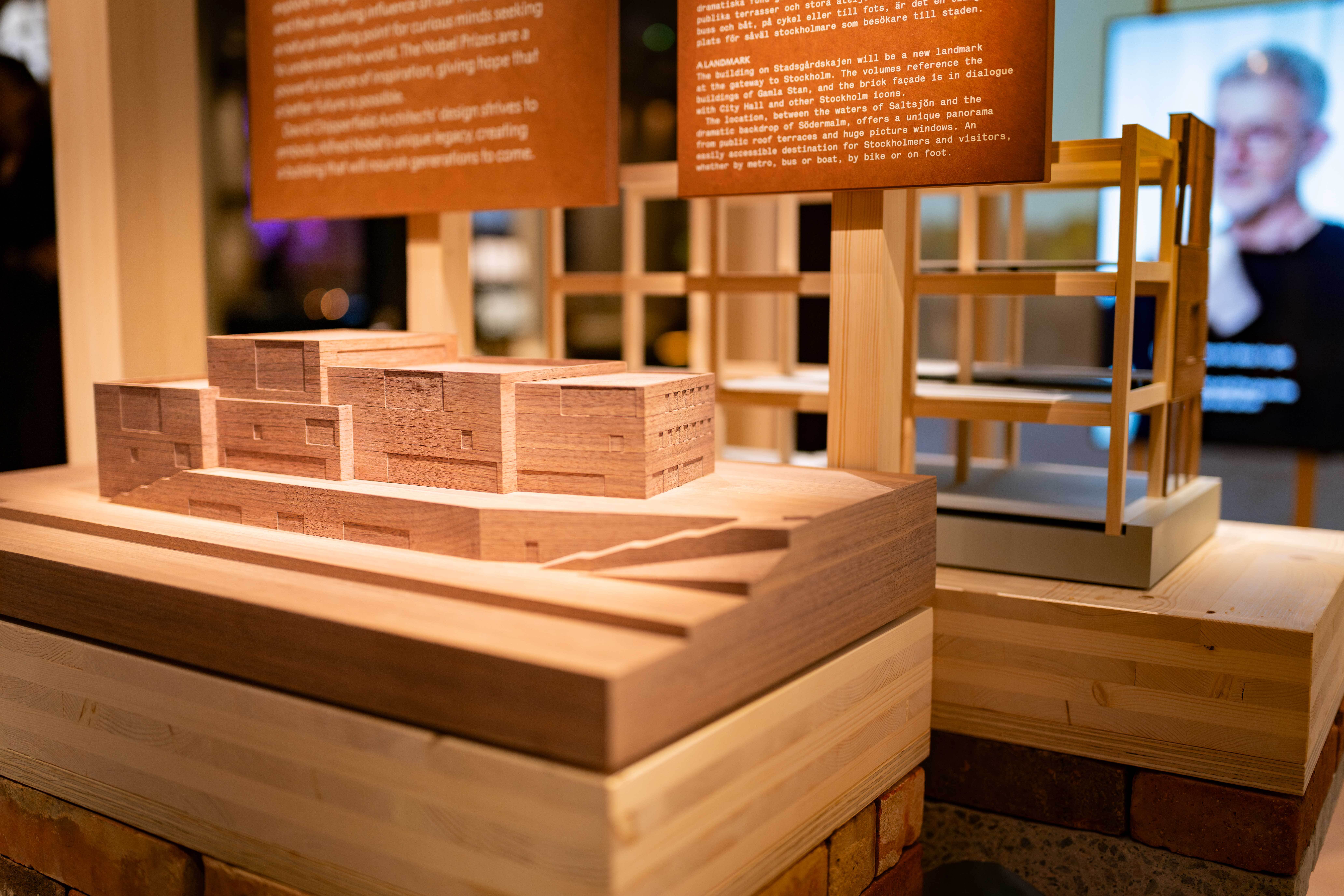
The new Nobel Center is conceived as an open, civic institution dedicated to the values of the Nobel Prize. Situated on Stockholm’s waterfront between Södermalm and the Old Town, it provides a space for dialogue between science, literature and peace efforts, hosting exhibitions, workshops, lectures and cultural events. Serving as a forum for people of all ages and interests, the building establishes a new house of knowledge for the city and an international point of reference.
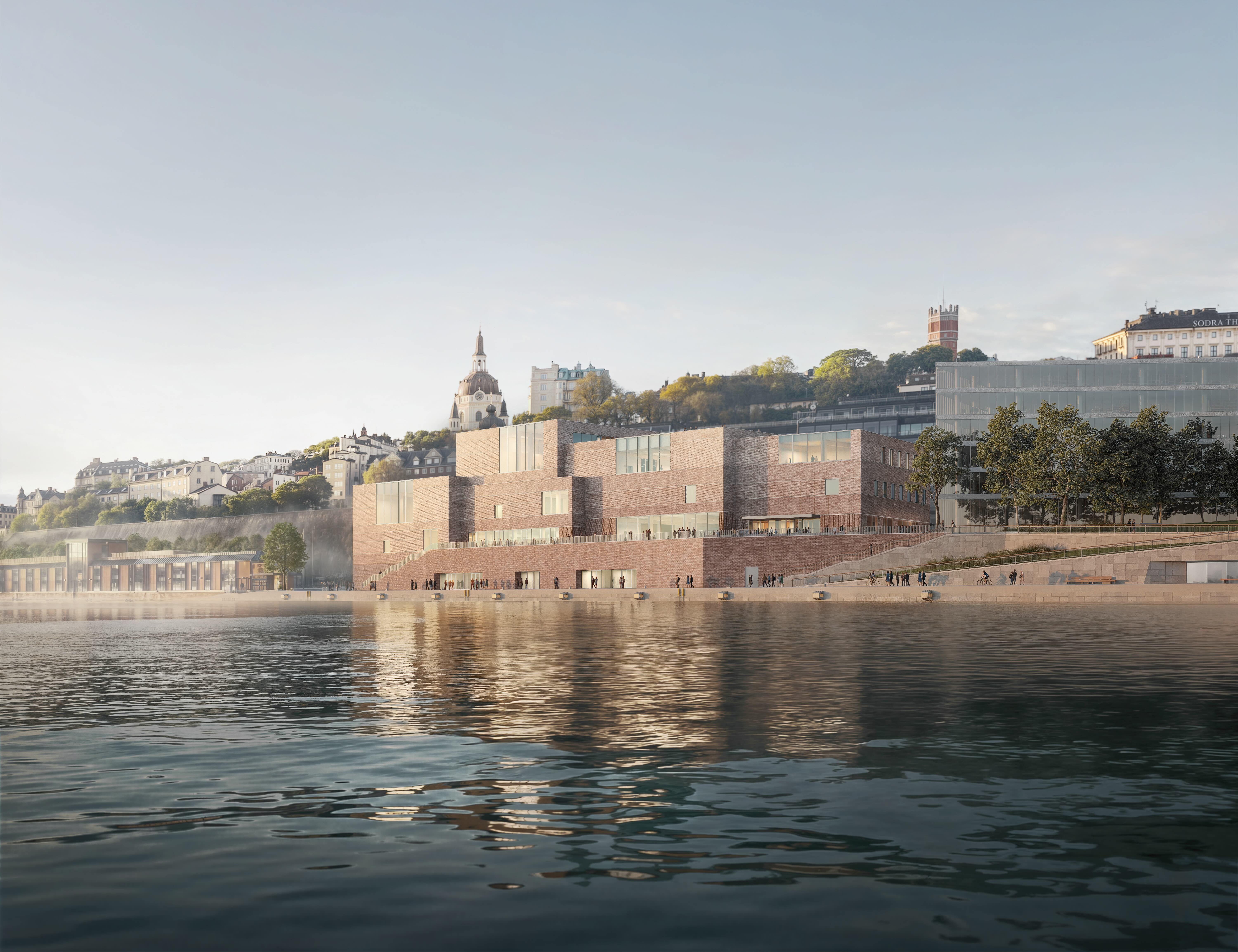
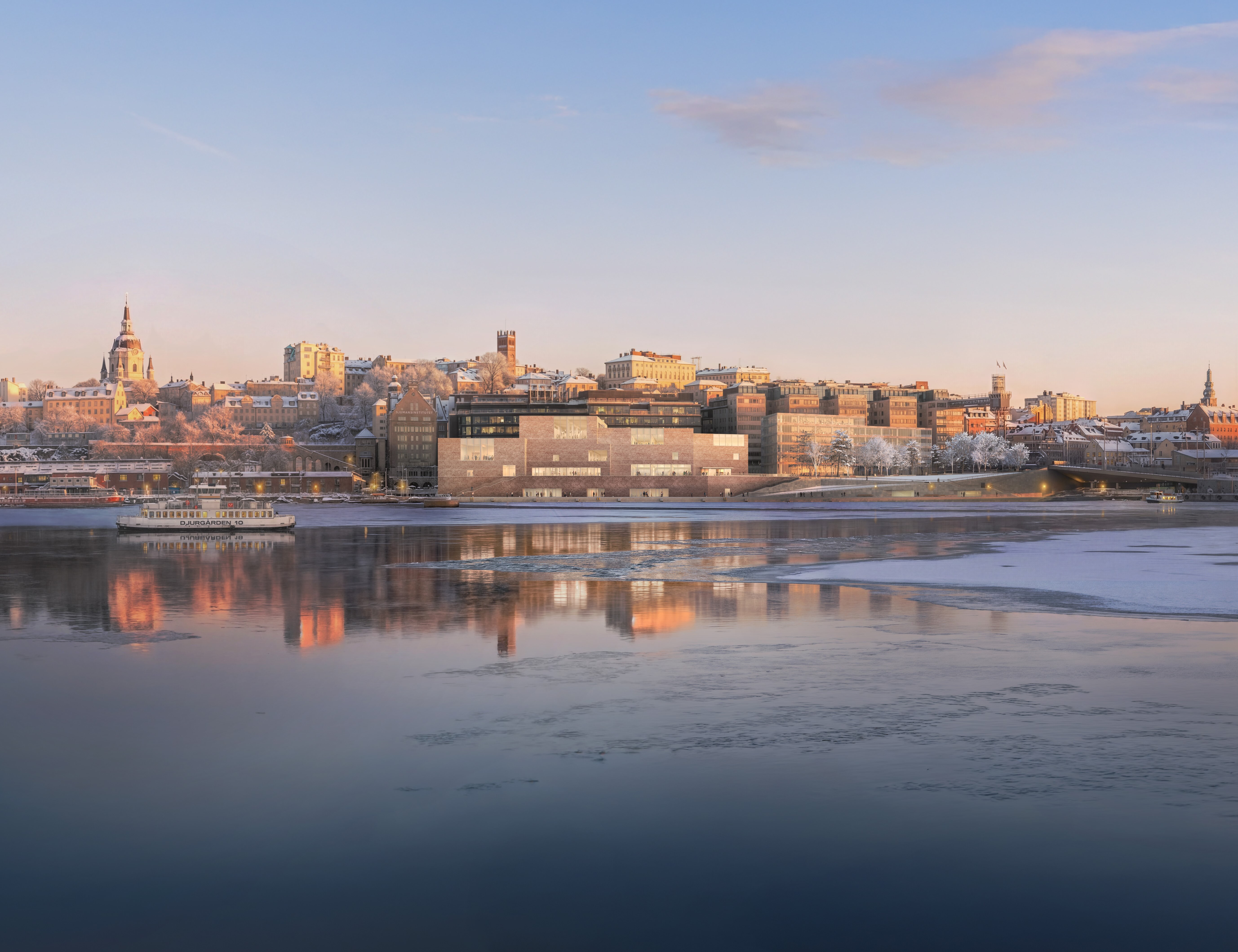
Its site at Slussen, where Lake Mälaren meets the Baltic Sea, has long been shaped by infrastructure, industry and the movement of people. Today, Slussen is evolving into a new network of public spaces, transport links and civic destinations. Within this evolving urban fabric, the Nobel Center emerges as a central cultural element, creating a new continuous public route that connects Fotografiska, the Stadsmuseet and the waterfront promenade.
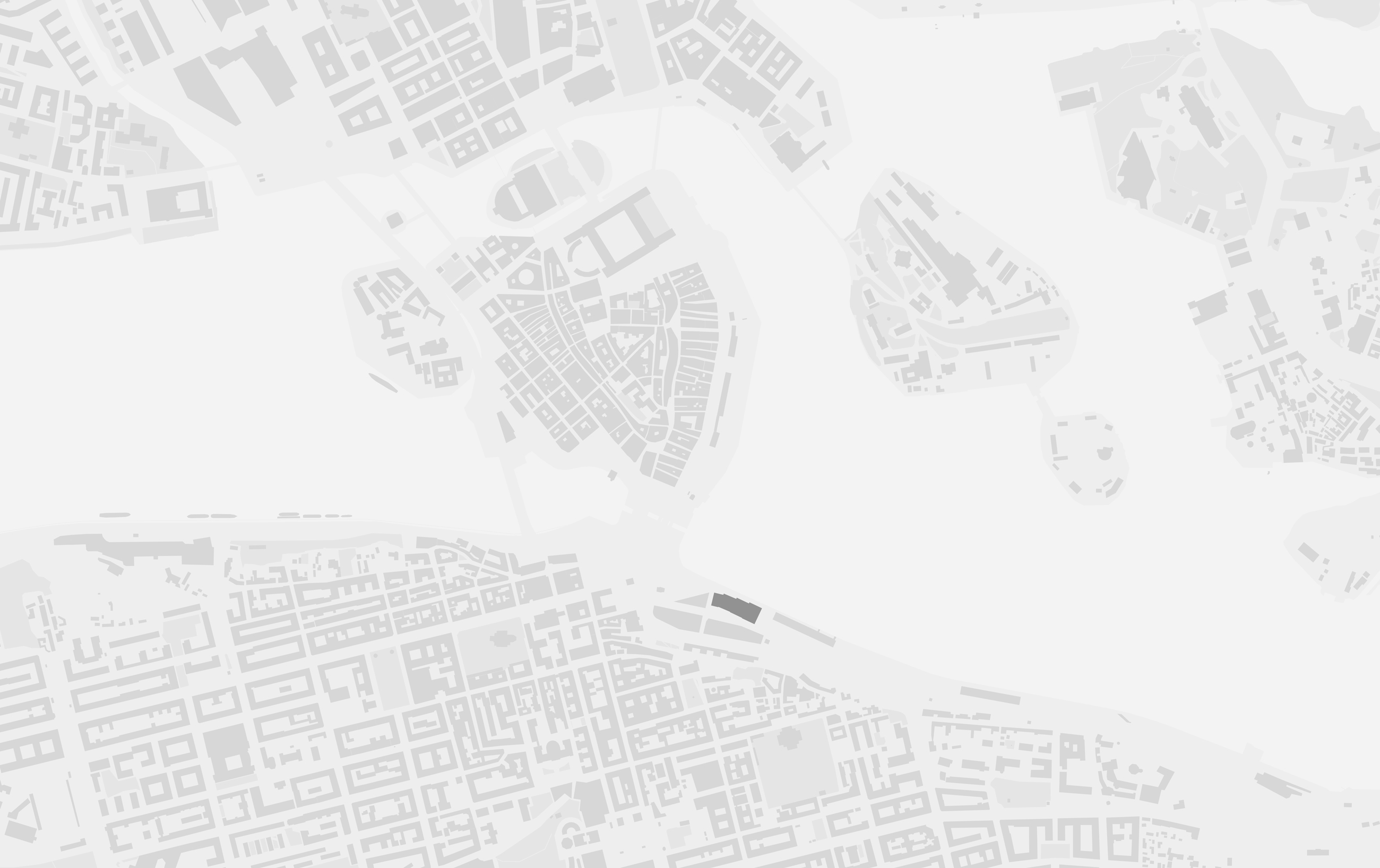
Location within Stockholm
The building is composed of interlocking volumes that respond to the topography of Södermalm. Their rhythm and proportions draw on the scale of the 17th-century merchant townhouses of the Old Town across the water, allowing the building to engage with Stockholm’s historic waterfront while reading as a single, coherent structure. Together with a new terrace in front of the building, the ground floor is conceived as an extension of the public realm, highly permeable and transparent, entrances to north and south, and a public foyer with shop and restaurant. It allows a fluid transition without thresholds between city and building, anchoring the Nobel Center in everyday urban life.
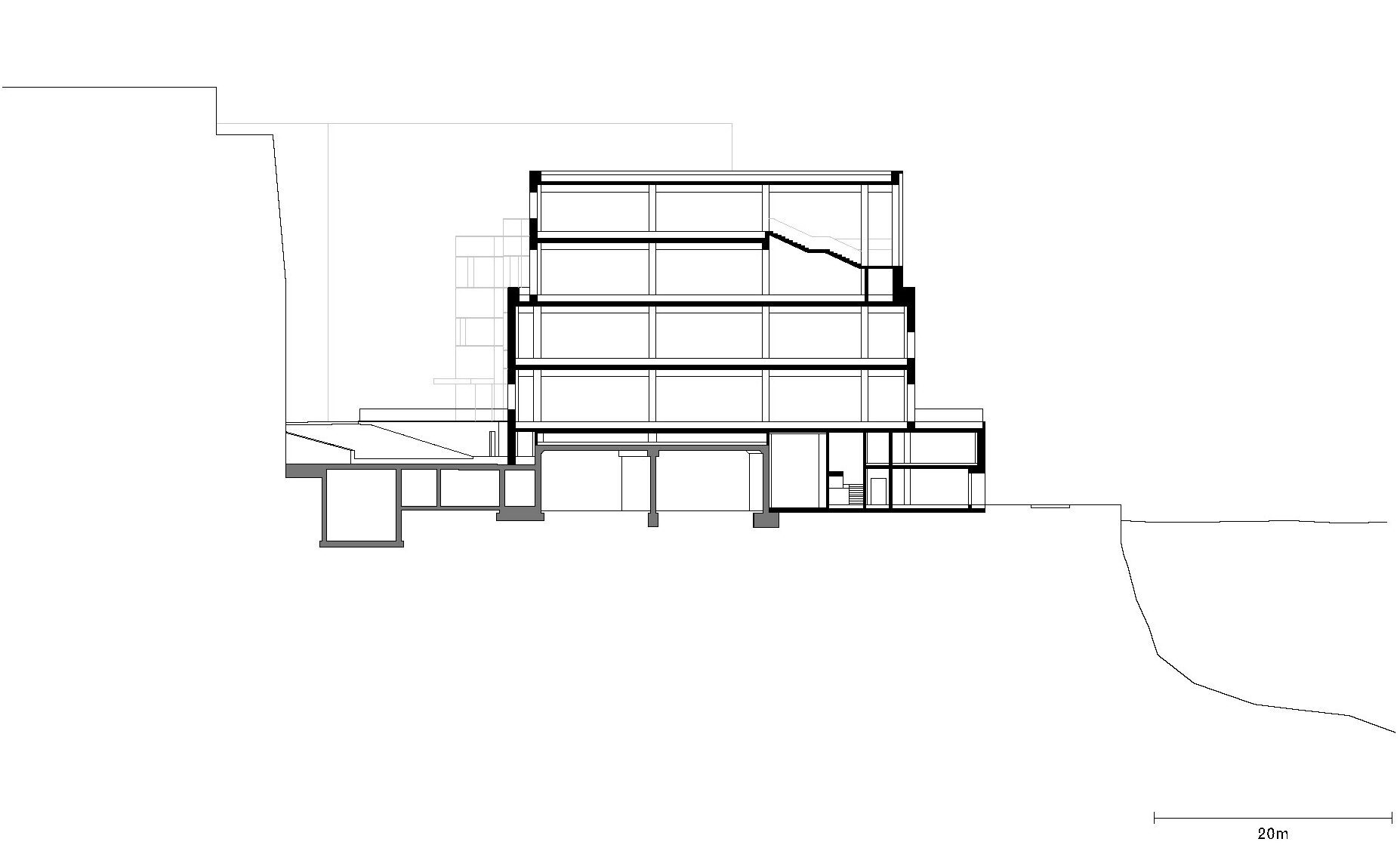
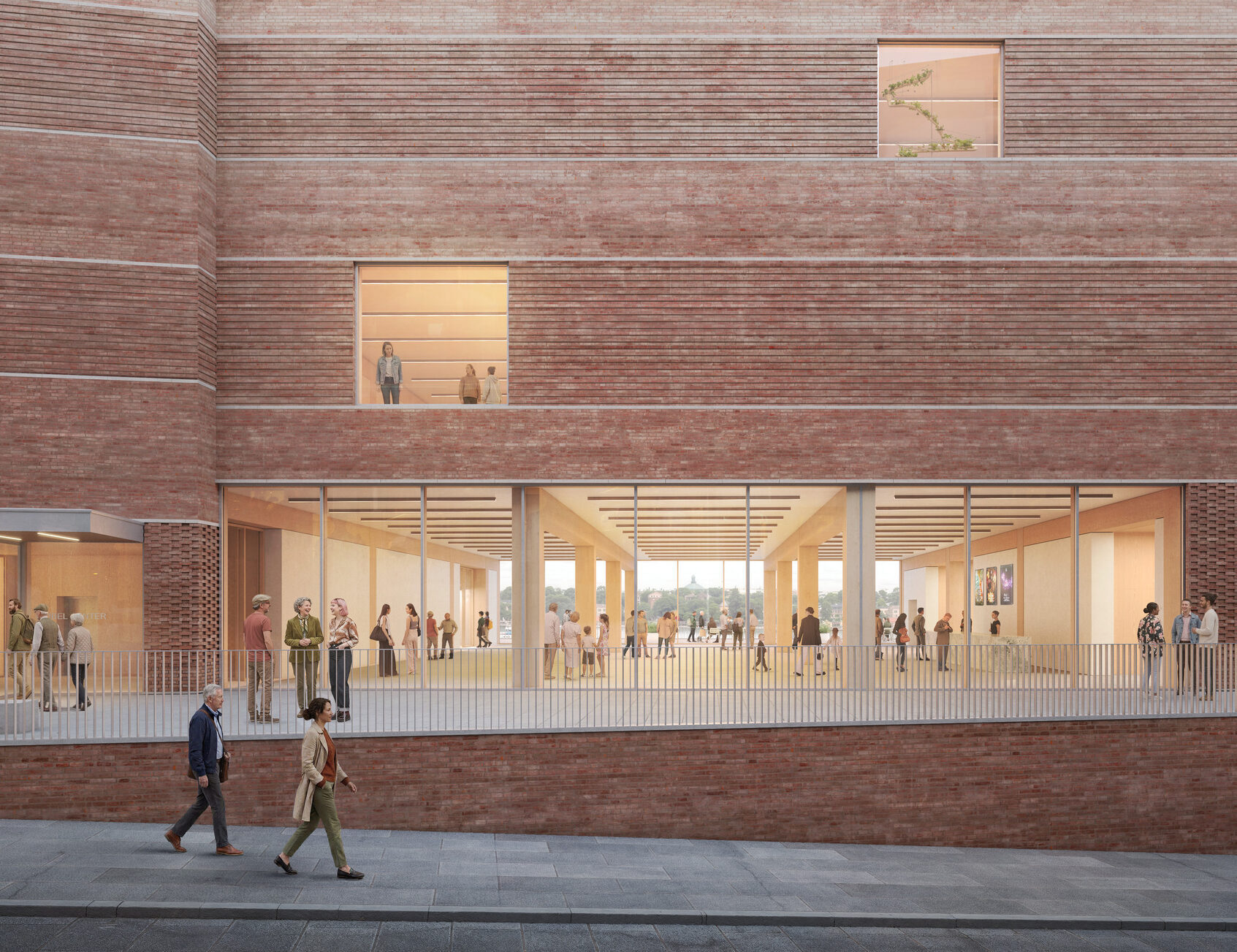
Inside, daylight is carefully orchestrated. Curated openings frame views to the city and the archipelago, offering moments of pause for the visitor’s journey through the building. Large north-facing windows in the uppermost floor highlight significant locations within the building, conveying the activities of the Nobel Center to the outside world.
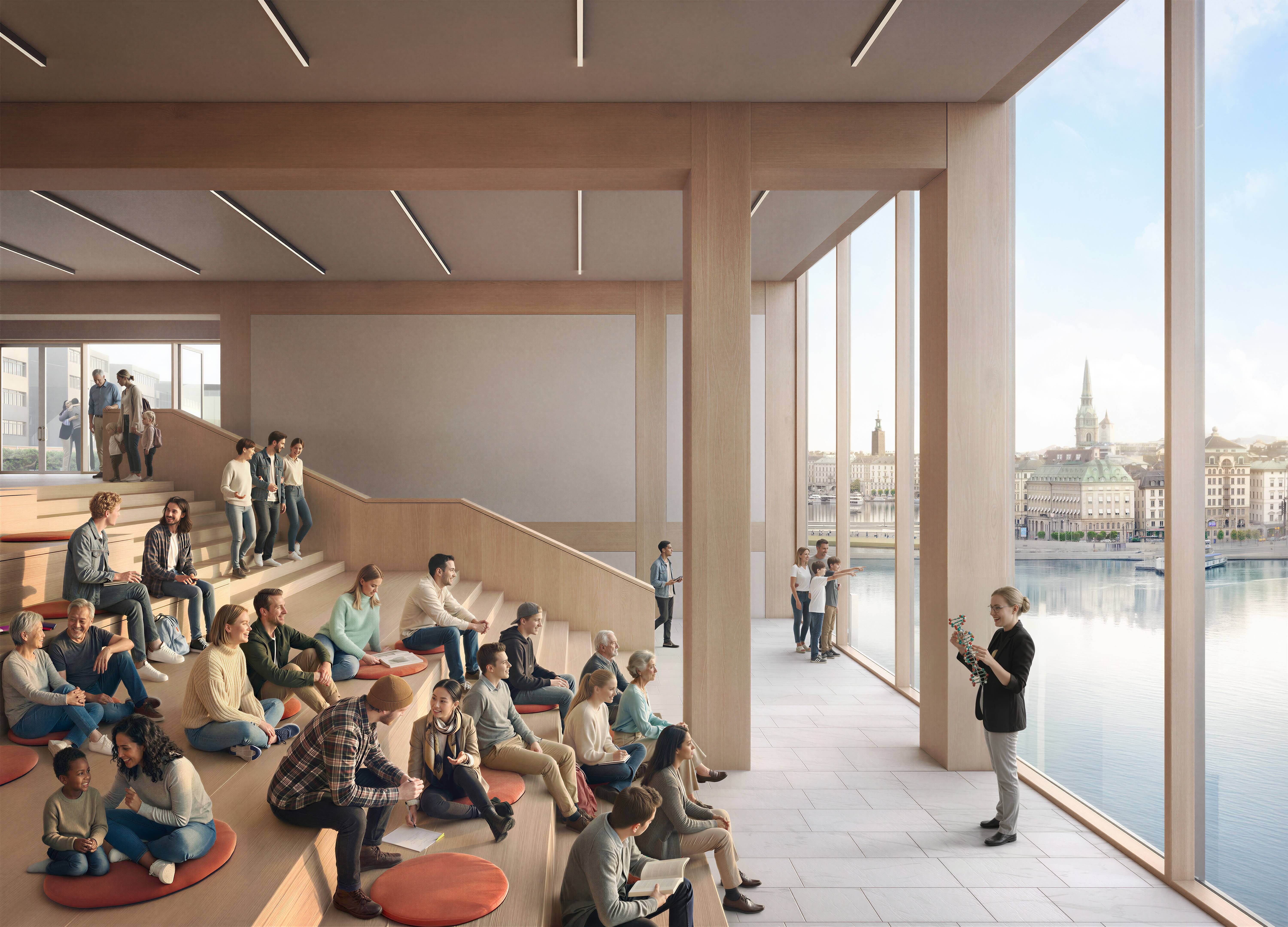
The selection of material reflects a commitment to sustainability as an integral societal responsibility. A primarily timber structure is adapted to the site’s conditions to reduce load transfers and minimize embodied carbon. The façade of reclaimed red brick roots the building in the city’s identity and recalls Stockholm’s historic architecture. Found in significant public institutions such as the City Hall the brick lends the building a sense of permanence and gravitas in its representation of the Nobel Prize.
Data and credits
- Concept study
- 2020
- Project start
- 2022
- Construction start (due)
- 2027
- Completion (due)
- 2031
- Gross floor area
- 13,000m²
- Client
- Stiftelsen Nobel Center
- Architect
- David Chipperfield Architects Berlin
- Partners
- David Chipperfield, Christoph Felger, Harald Müller
- Project architect
- Jan Parth
- Project team
- Marlen Beckedahl, Kevin Losio, Hubert Pawela, Franziska Rusch, Diana Schaffrannek, Robert Westphal
- Concept study team
- Thorsten Rothmann, Simpert Hafenmeier, Jan Sienkiewicz
- Local architect
- Sweco Architects, Stockholm
- Landscape architect
- Outer space arkitekter, Stockholm
- Project controlling
- Byggstyrning, Stockholm
- Structural engineer
- Tyréns, Stockholm
- Services engineer
- SEC Project, Stockholm
Rejlers, Stockholm
AFRY, Stockholm - Building physics, Acoustic consultant
- Tyréns, Stockholm
- Fire consultant
- Verifire Brandskyddsprojektering AB, Stockholm
- Visualisations
- Onirism