Hasenheide 13
Berlin, Germany
2019–
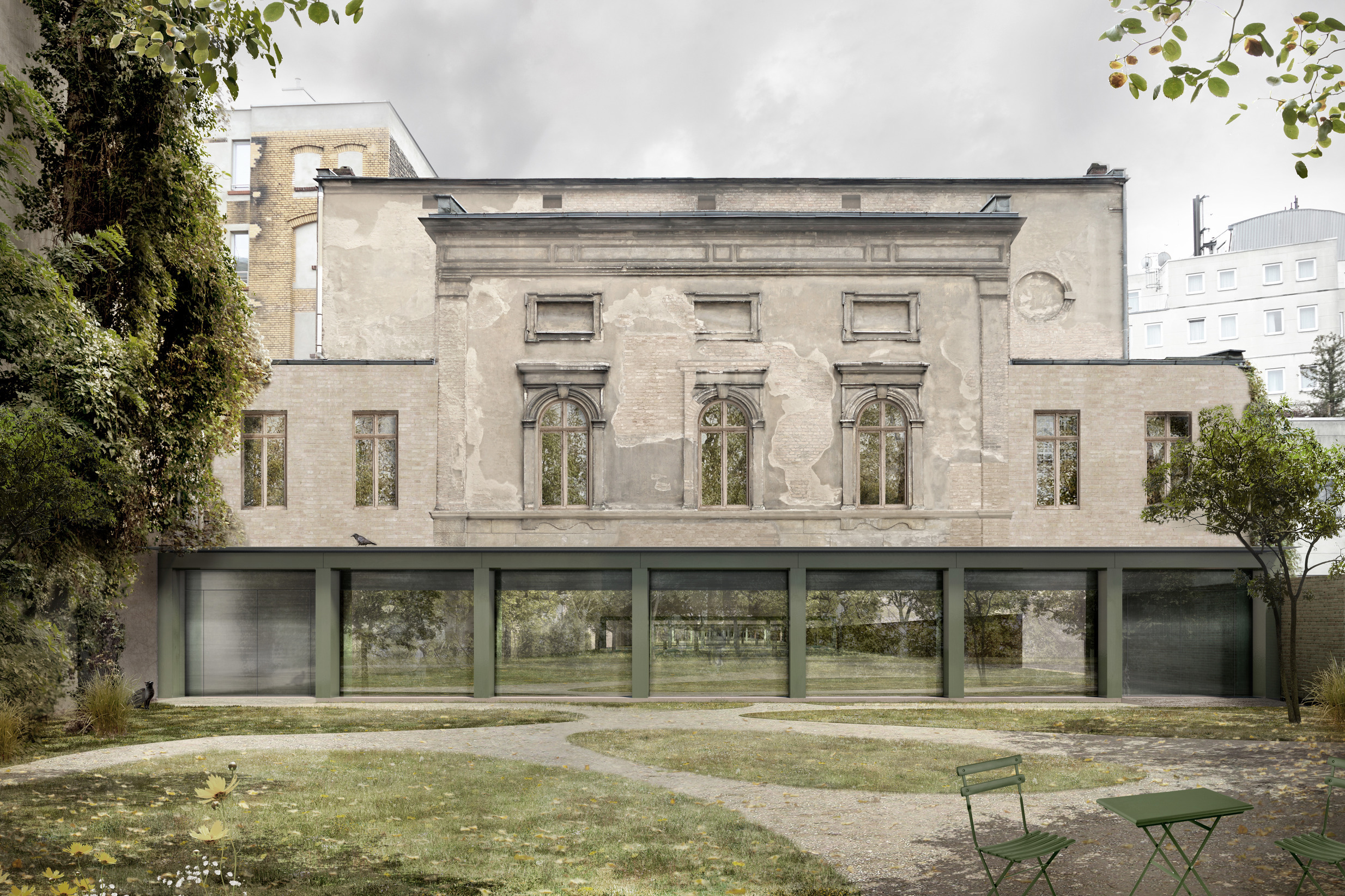
The former ballroom building at Hasenheide 13 in Berlin Kreuzberg, not far from the public park Volkspark Hasenheide, is being converted into an exhibition space for contemporary art. Originally built 1899 as an entertainment venue, the building subsequently served as a military hospital during the Second World War, as a cinema in the post-war era and later as a large club venue. Largely spared during the war, it underwent several structural changes due to the different uses over the years. The building ensemble consisting of the front building and the ballroom will be repaired, modernised and extended by three new low-rise building volumes.
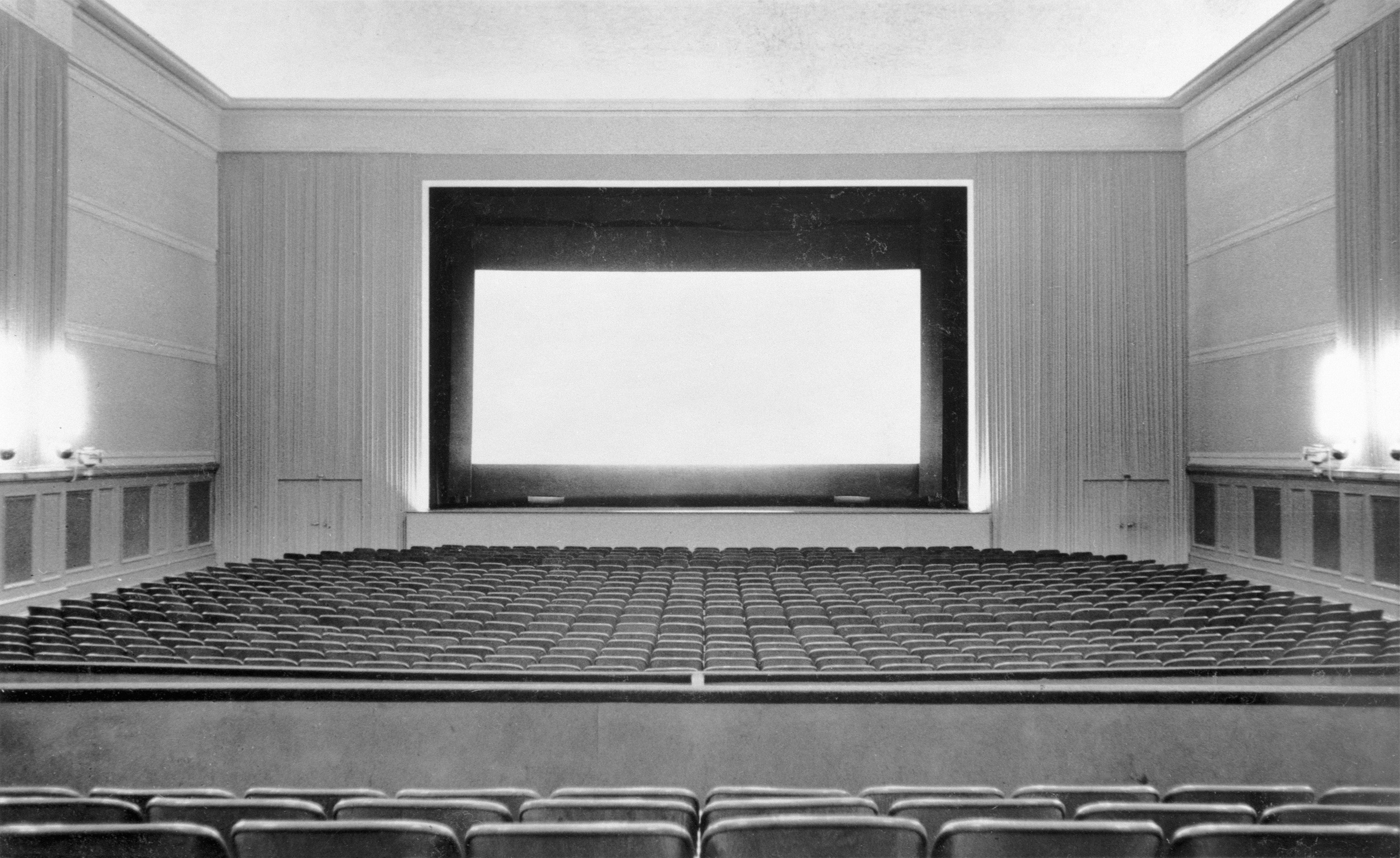
Auditorium of the former "Primus Palast", around 1952
Landesarchiv Berlin, F Rep. 290 (05) Nr. 0315061 / Foto: k. A.
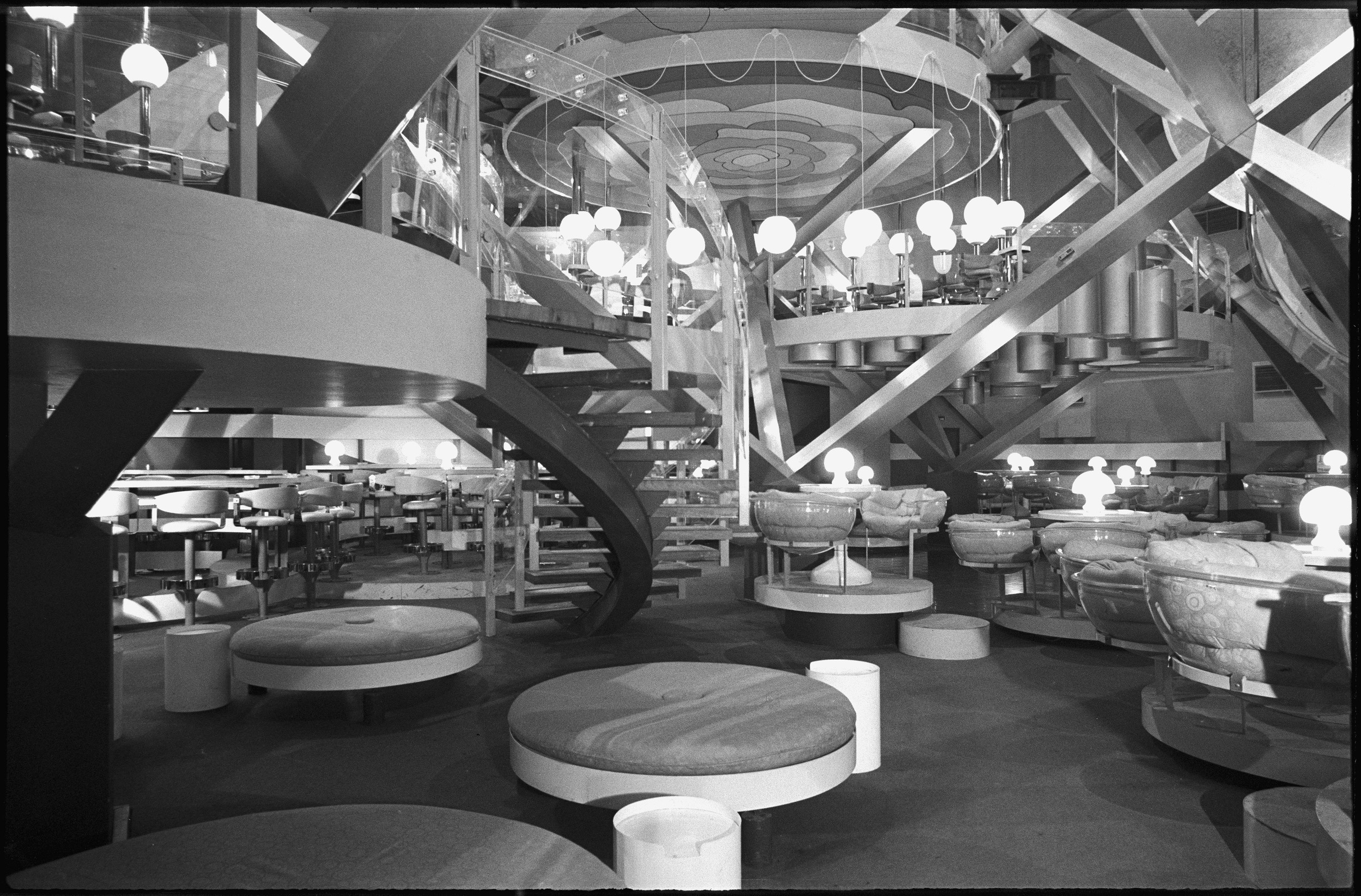
Landesarchiv Berlin, F Rep. 290 (03) Nr. 0354105 /
Foto: Huschke, Willi
The restoration preserves and strengthens the specific features of the existing building. Like a palimpsest with layers and traces from 120 years of use, the ballroom, which is free of columns, is impressive due its considerable volume. The original painted walls will be preserved, cleaned and restored. The deep blue painted wire plaster ceiling of the former cinema, the rudiments of the steel and stage fixtures of the former club, but also the direct access to the ballroom, the picturesque character of the garden façade as well as the forest-like lime tree grove in the rear garden will all be preserved.
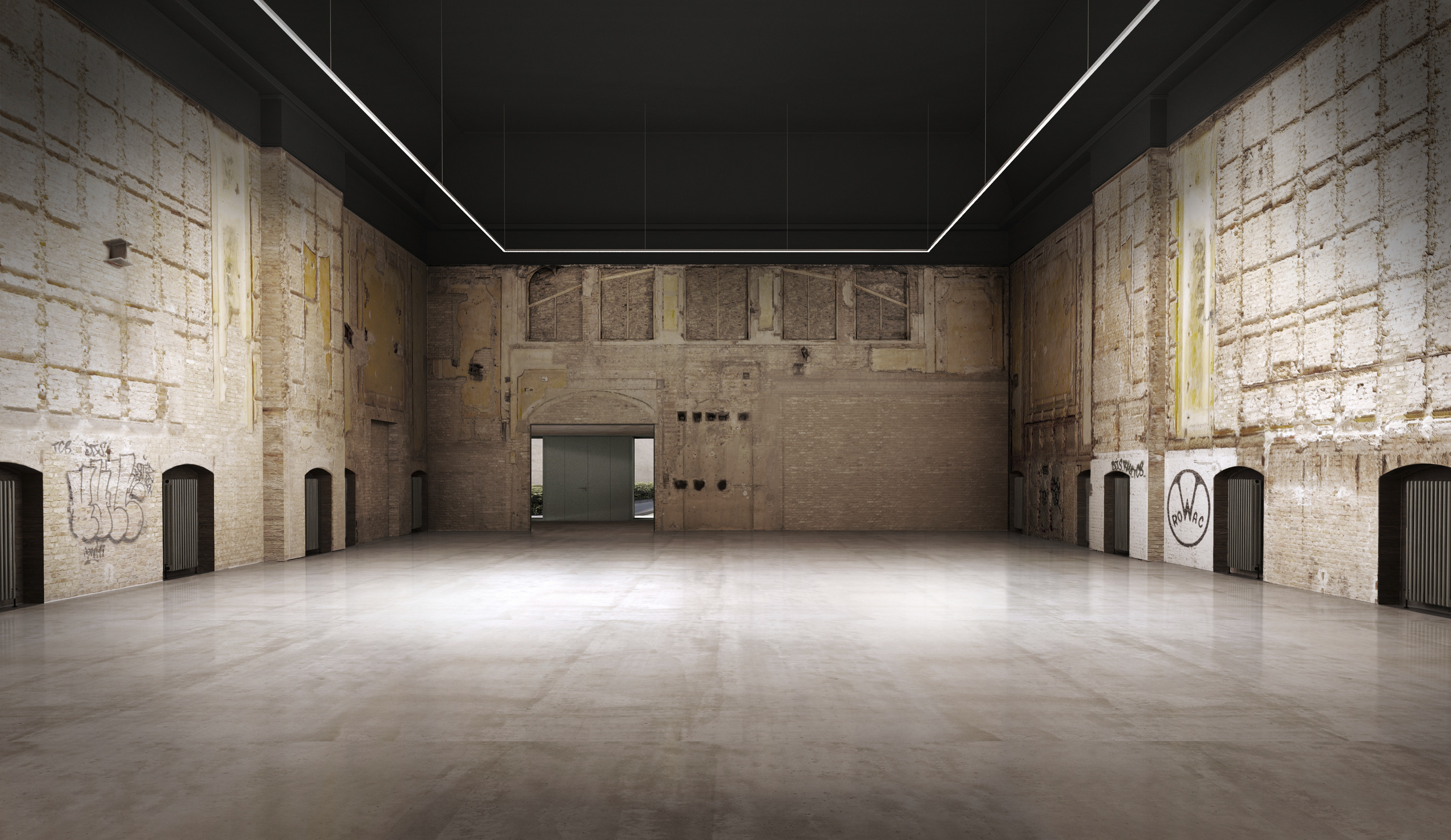
With only a few interventions, the building is transported into the present day. The walls are freed from disturbing additions and fixtures and unnecessary openings are sealed using brickwork. A new reinforced concrete ceiling serves as the floor for the exhibition space in the former ballroom and as the ceiling for an additional exhibition space in the basement, where it is supported by eight existing symmetrically arranged masonry pillars.
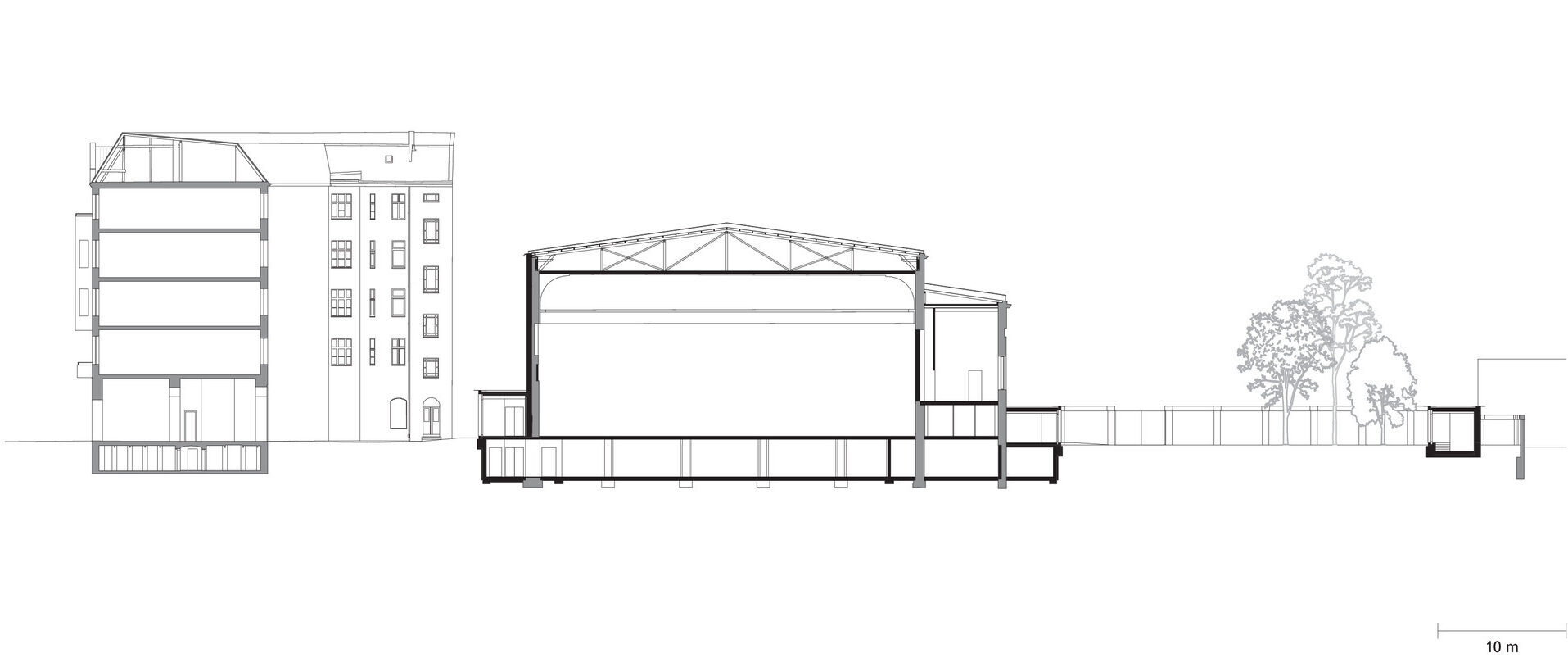
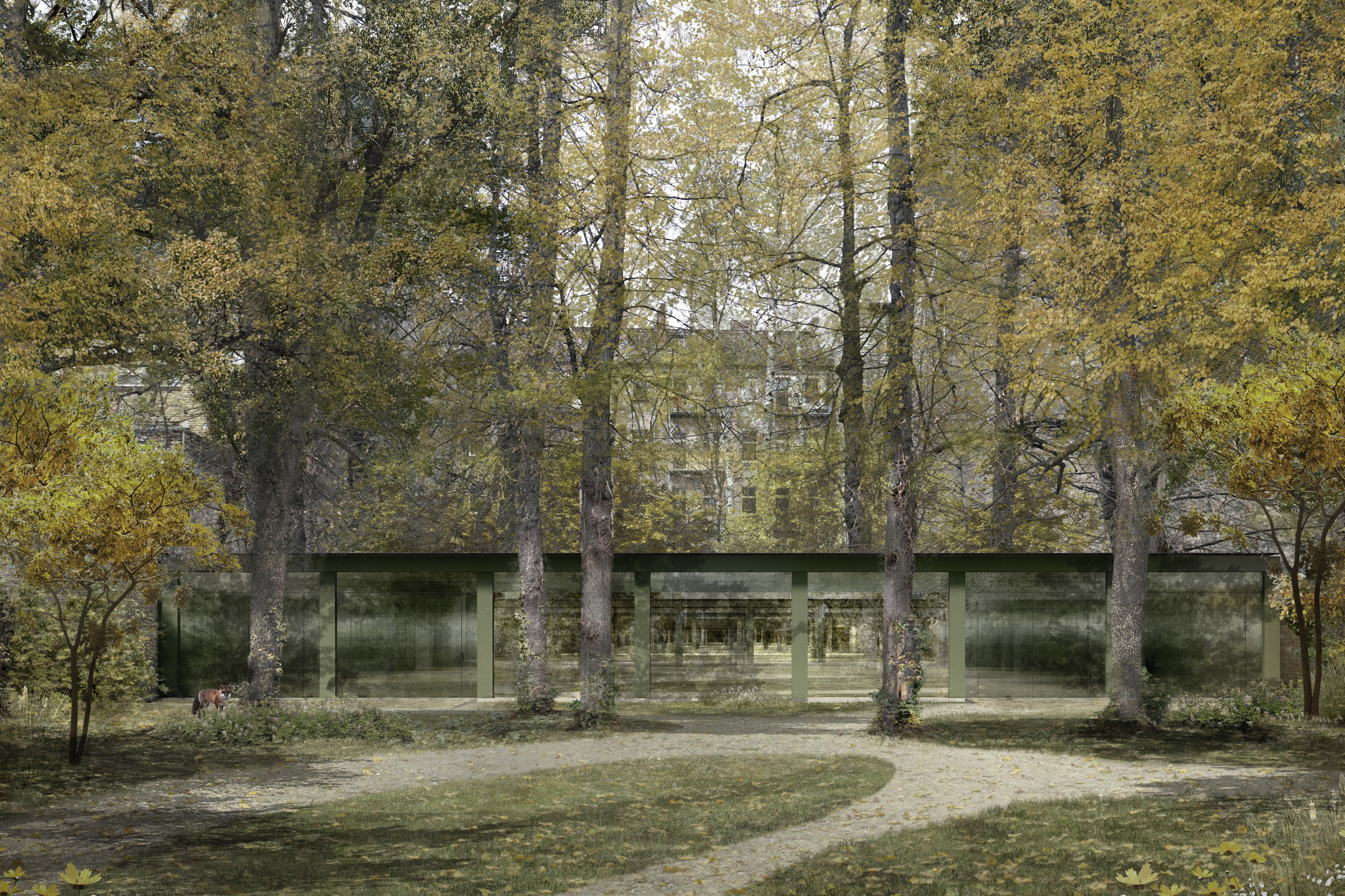
Two of the three new buildings connect to the narrow ends of the ballroom building. They serve as foyers, providing access to the exhibition areas from both sides. The third sits on the northern boundary of the site and is used as a workshop and storage space. The new buildings are constructed in timber on reinforced concrete. The flat roofs are extensively greened and the main elevations are fully glazed, allowing for wide views into the landscaped garden with its old trees.
Data and credits
- Project start
- 2019
- Construction start
- 2022
- Gross floor area
- 2,300m²
- Client
- Wemhöner Real Estate GmbH & Co. KG
- User
- Sammlung Wemhöner
- Architect
- David Chipperfield Architects Berlin
- Partners
- David Chipperfield, Martin Reichert, Alexander Schwarz (Design lead)
- Project architect
- Julia Schenke
- Project team
- Anke Fritzsch, Dirk Gschwind, Frithjof Kahl, Mariska
Rohde, Thomas Schöpf - Quantity surveyor, Technical design, Site supervision, Executive architect
- rw+, Gesellschaft von Architekten mbH, Berlin
- Landscape architect
- Wirtz International Landscape Architects, Schoten
- Structural engineer
- IngenieurGruppe Bauen, PartG mbB, Berlin
- Services engineer
- Dipl.-Ing. Clemens Beutler, Beratender Ingenieur für
Versorgungstechnik, Berlin - Building physics, Acoustics
- ISRW Institut für Schalltechnik, Raumakustik,
Wärmeschutz, Berlin - Fire consultant
- hhpberlin, Ingenieure für Brandschutz GmbH, Berlin
- Restoration
- Steinrestaurierung Ellwart GmbH & Co. KG, Berlin