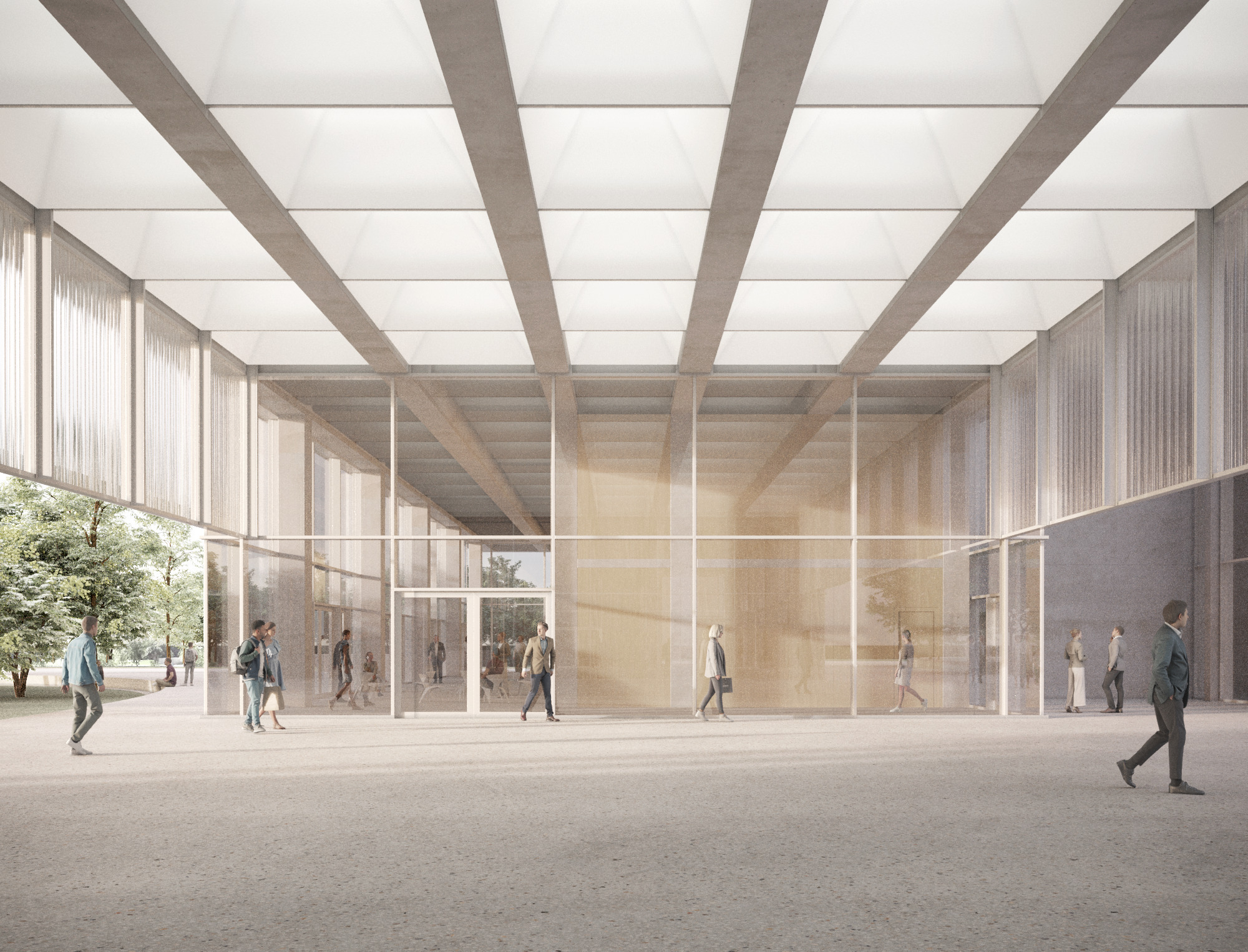
Tridea high-rise complex
Munich, Germany
2019–
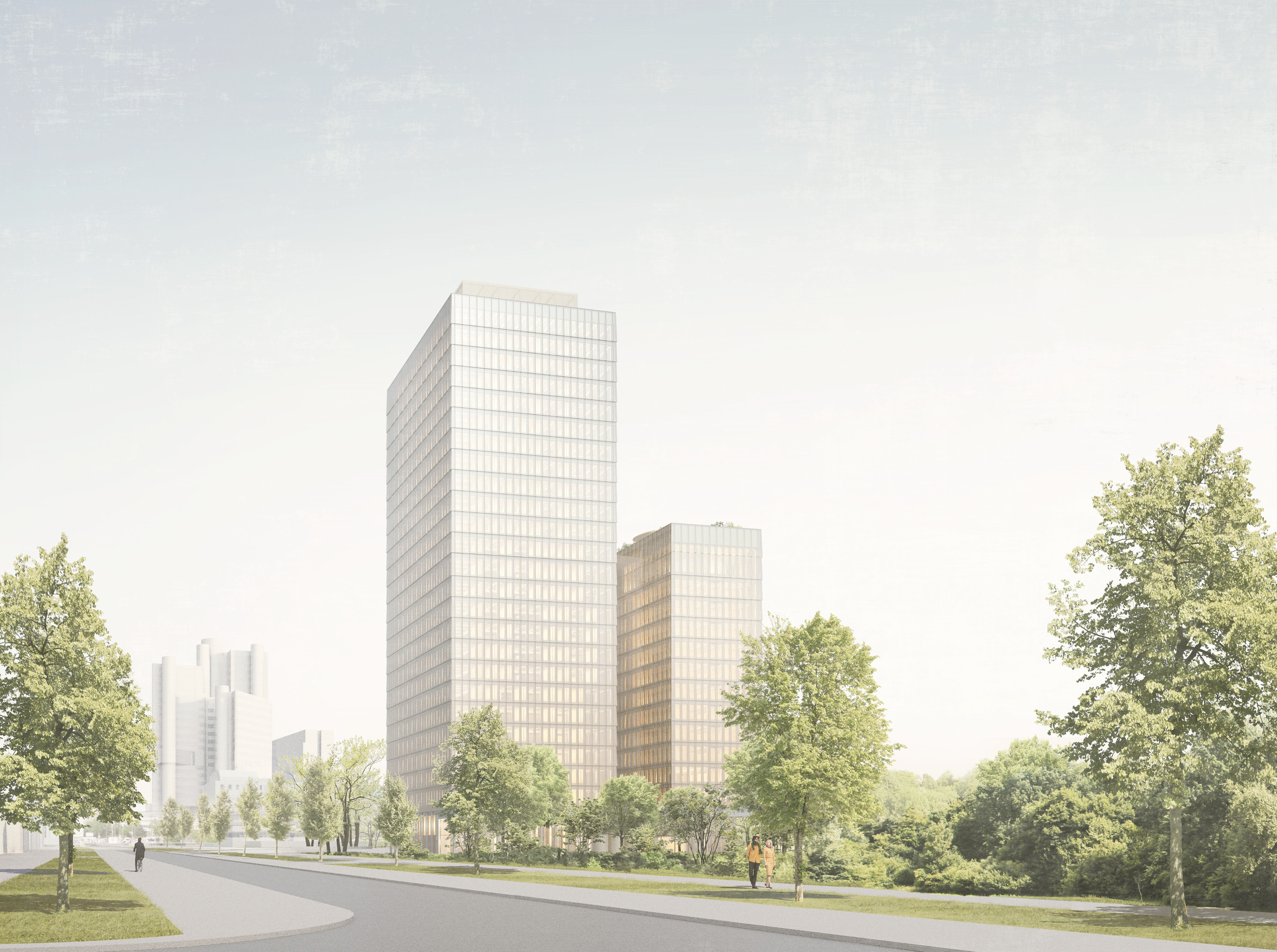
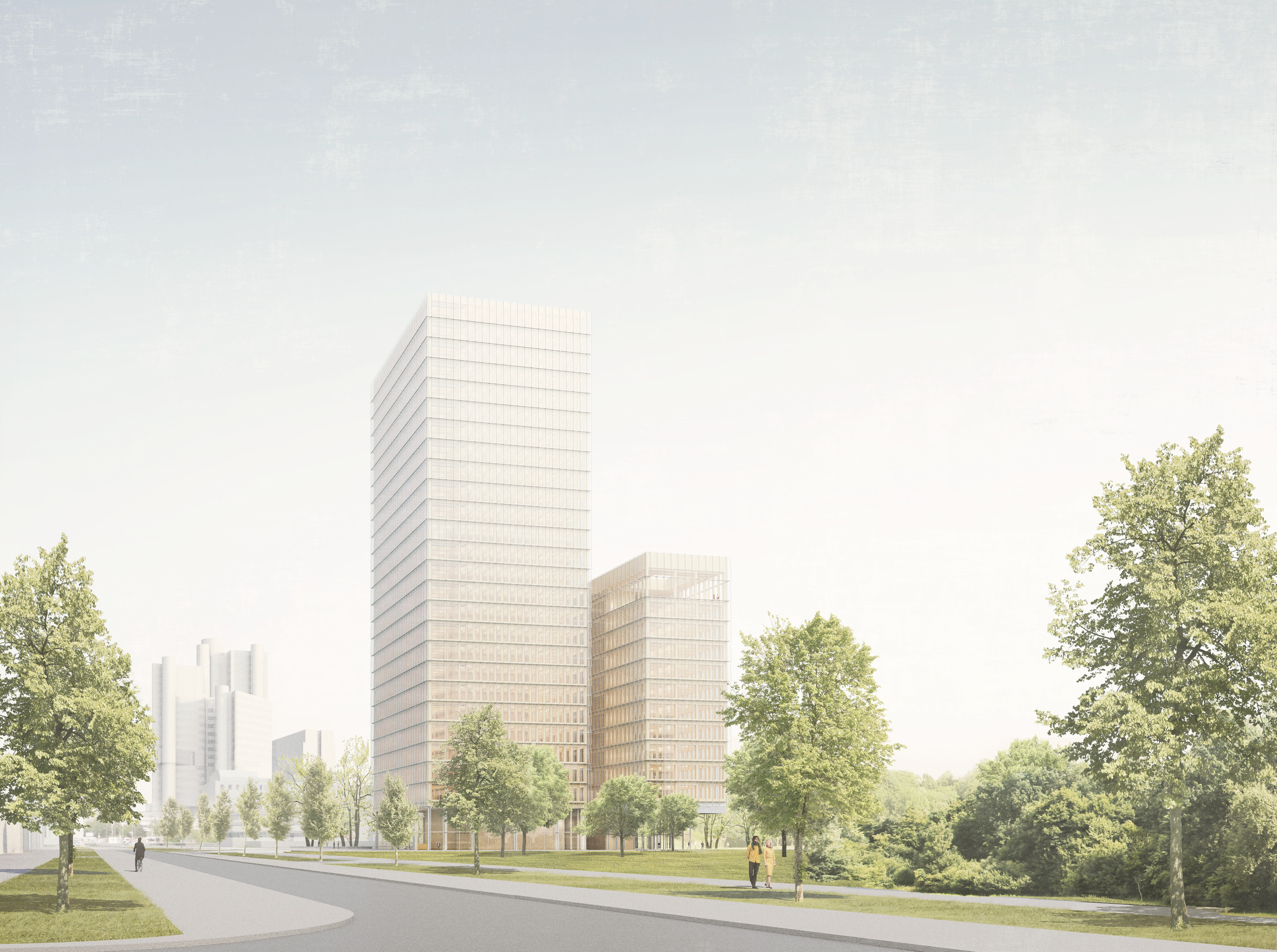
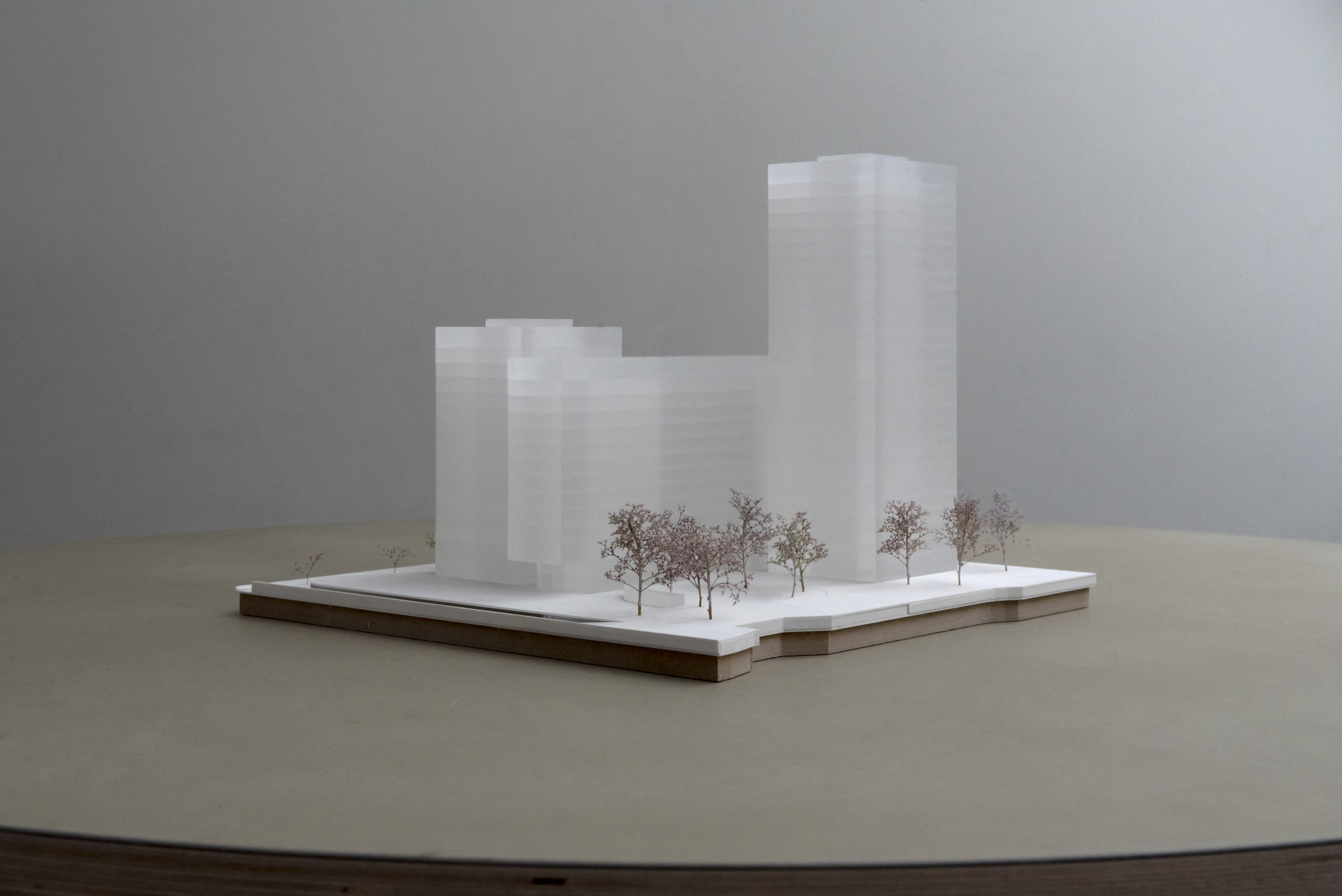
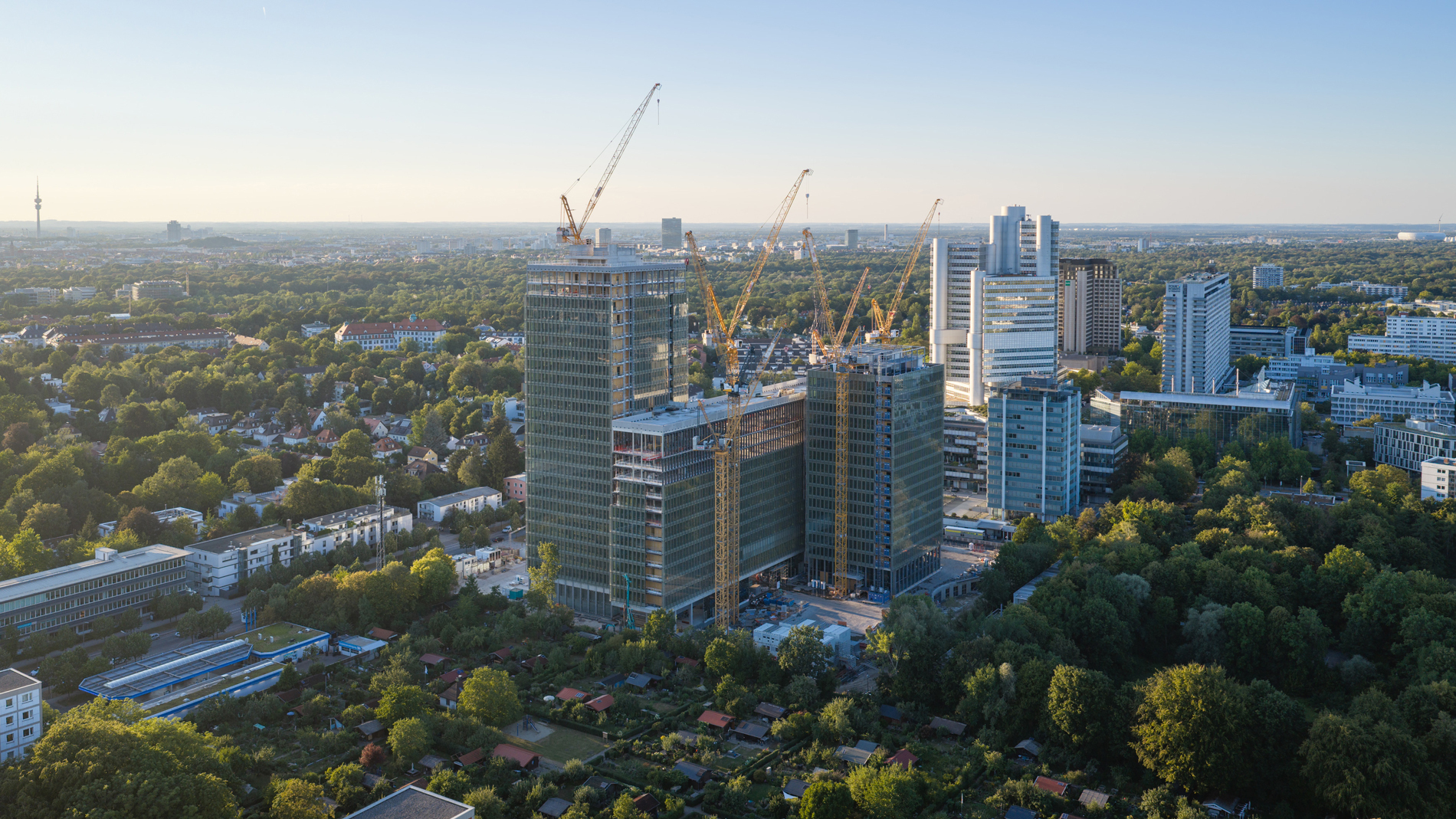
A new high-rise complex is taking shape in Munich’s Bogenhausen district, including one of the tallest timber-hybrid buildings in Germany. The development, which will also accommodate the new headquarters of the Bayerische Versorgungskammer, is composed of three building volumes: two towers of 26 and 17 stories respectively are connected by an elongated wing. While the taller tower on the street provides a counterpart to the high-rise buildings defining the cityscape to the north, the open design of the ground floor creates a fluent transition between city and nature, acting as a gateway to the adjoining park.
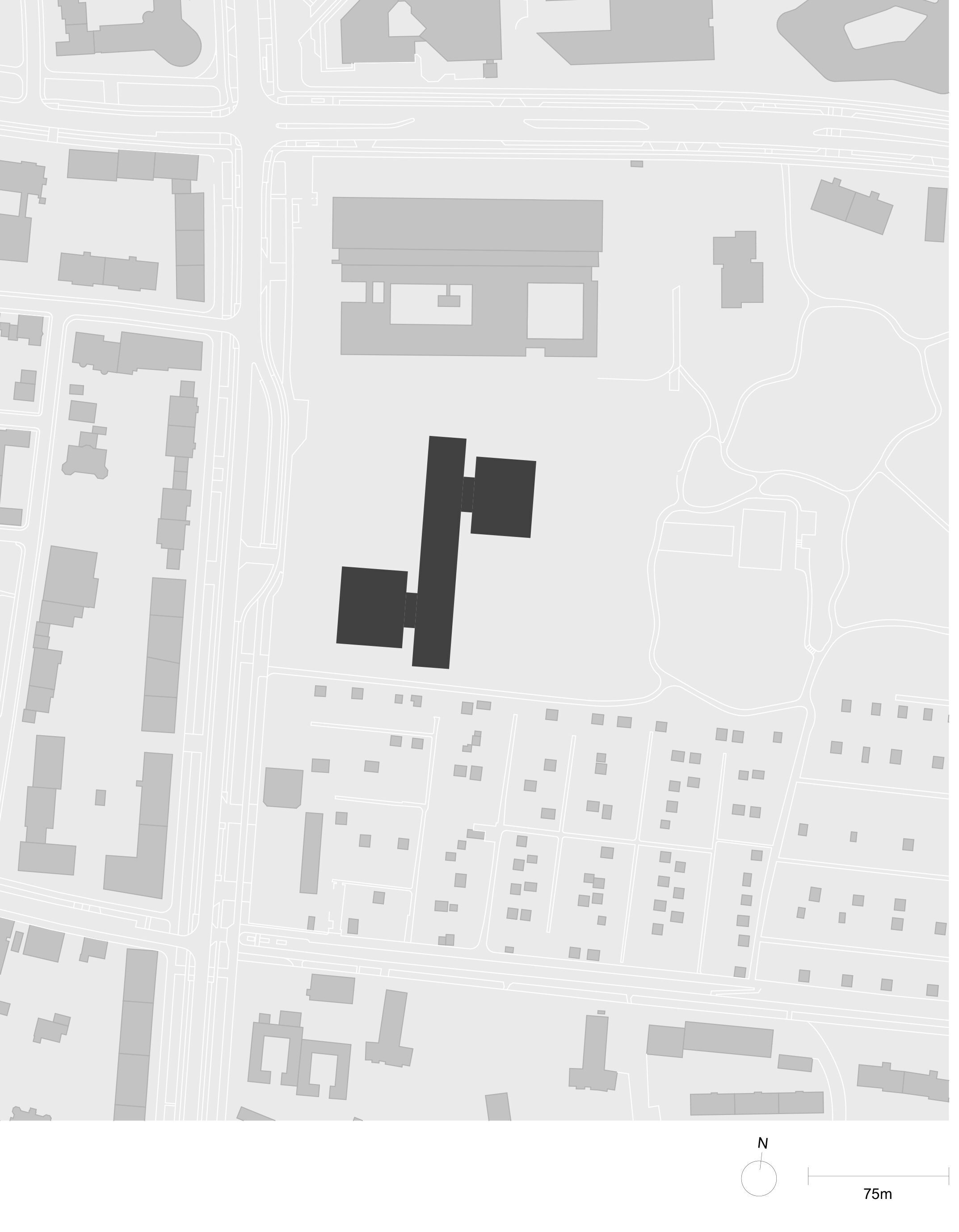
Site plan
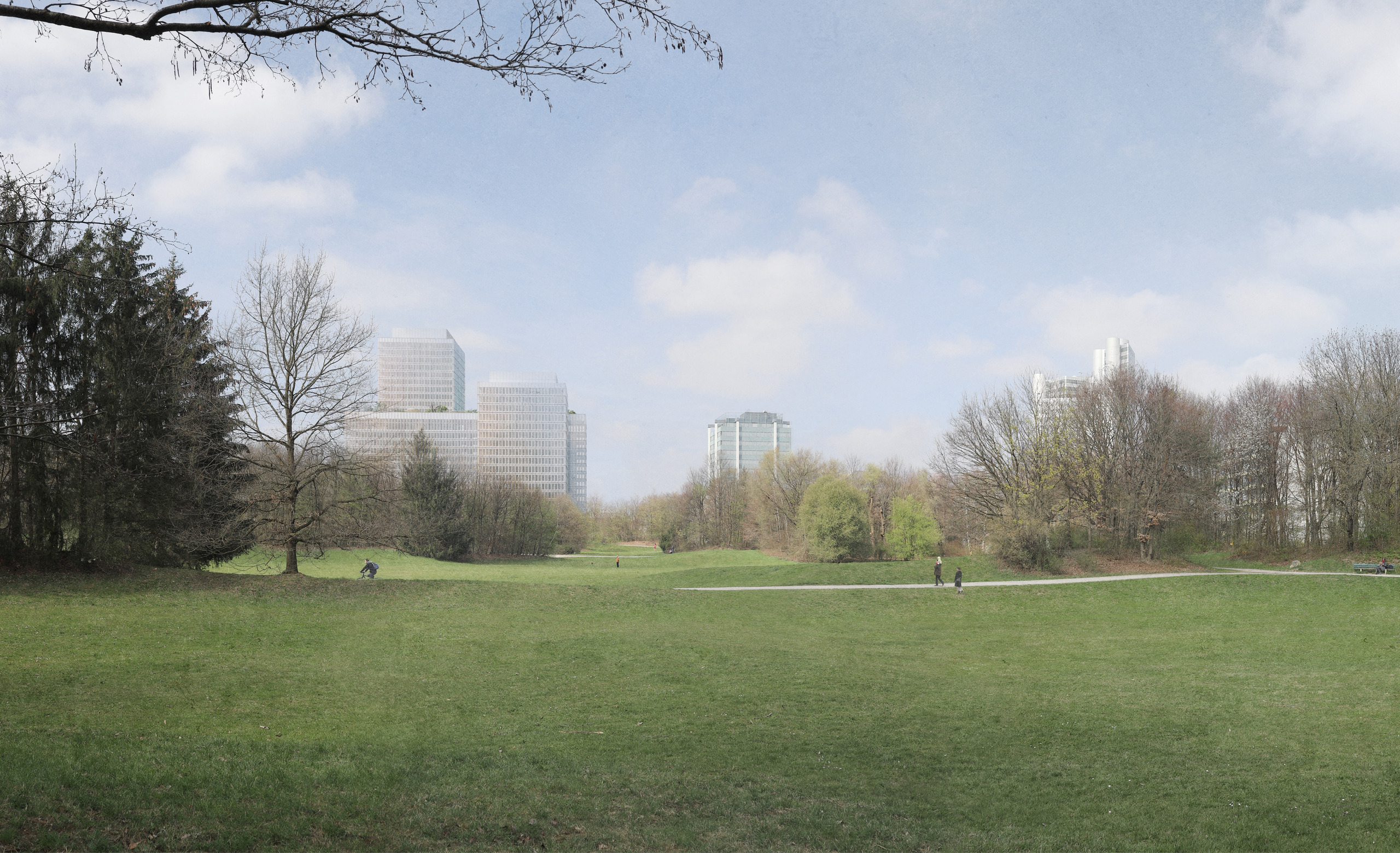
View from the park
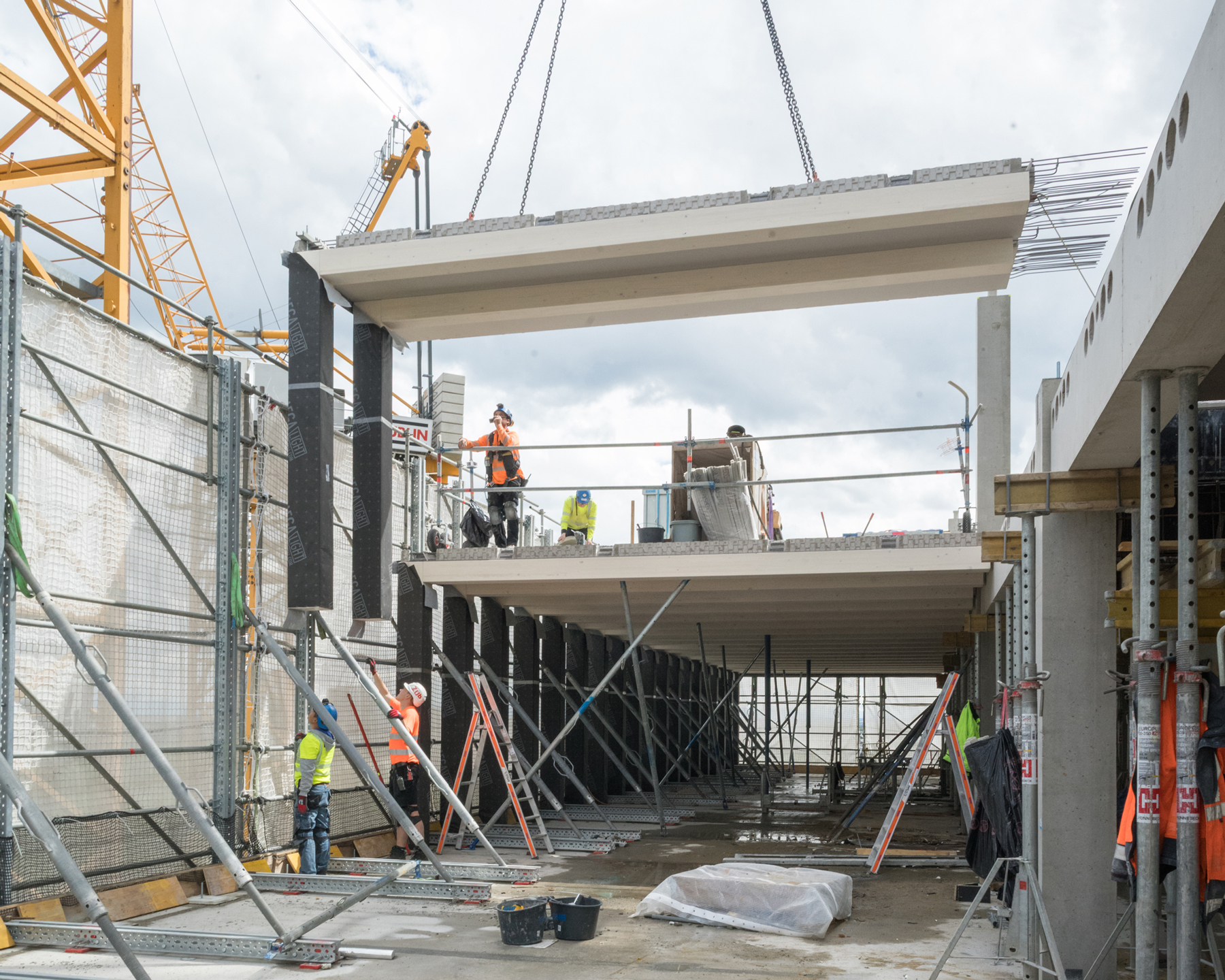
A central element of the design is the use of timber as a structural material. The 60-metre-high tower and the connecting wing are built with glulam columns and beams combined with timber-concrete composite slabs. Compared to a conventional construction, this significantly reduces the use of concrete and steel and saves CO₂. A high degree of prefabrication and modularity enables an efficient construction process with positive effects on cost and construction time.
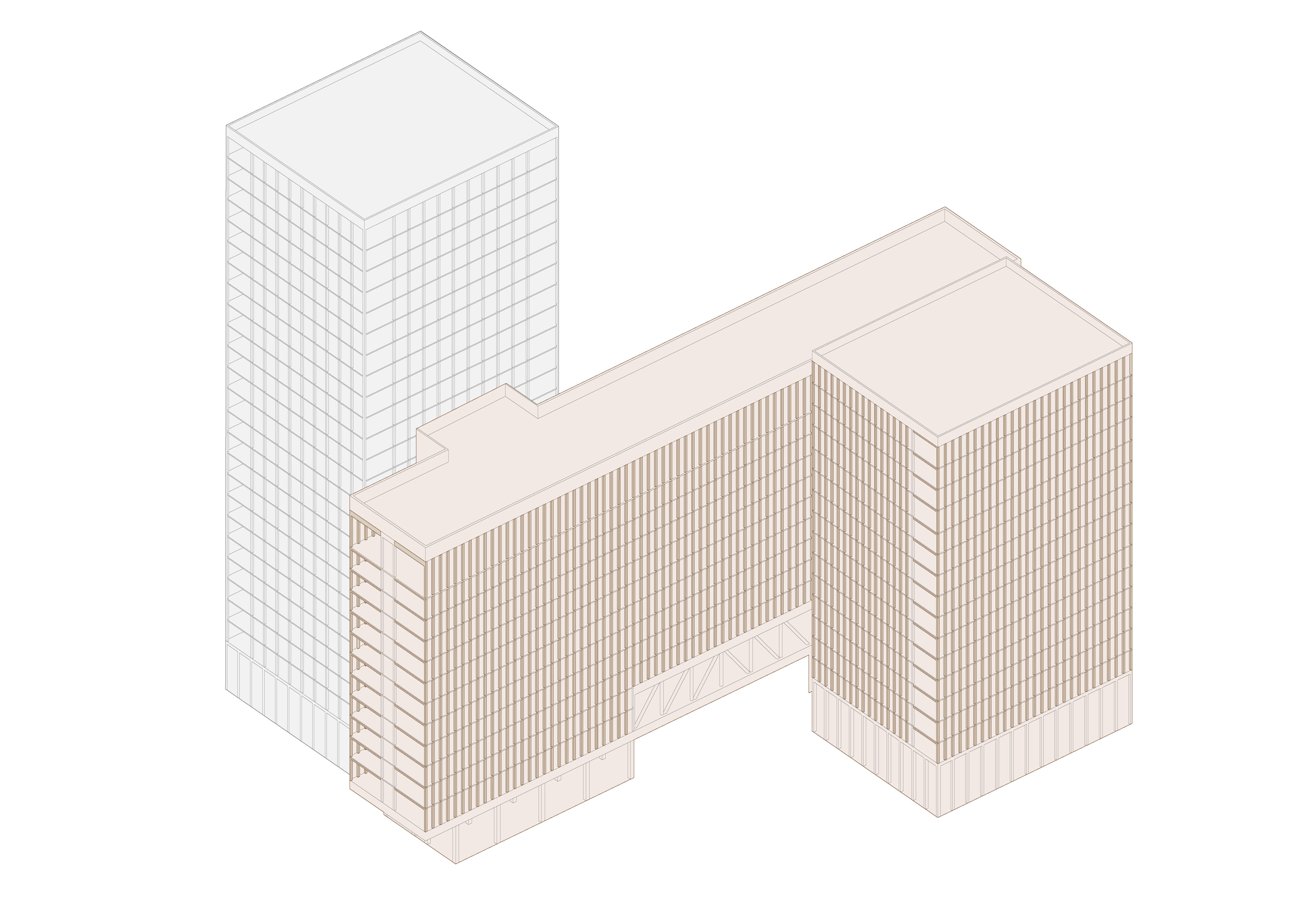
The direct juxtaposition of both construction methods turns the project into a tangible testing ground.
Brown: timber-hybrid construction
Grey: concrete rib-structure
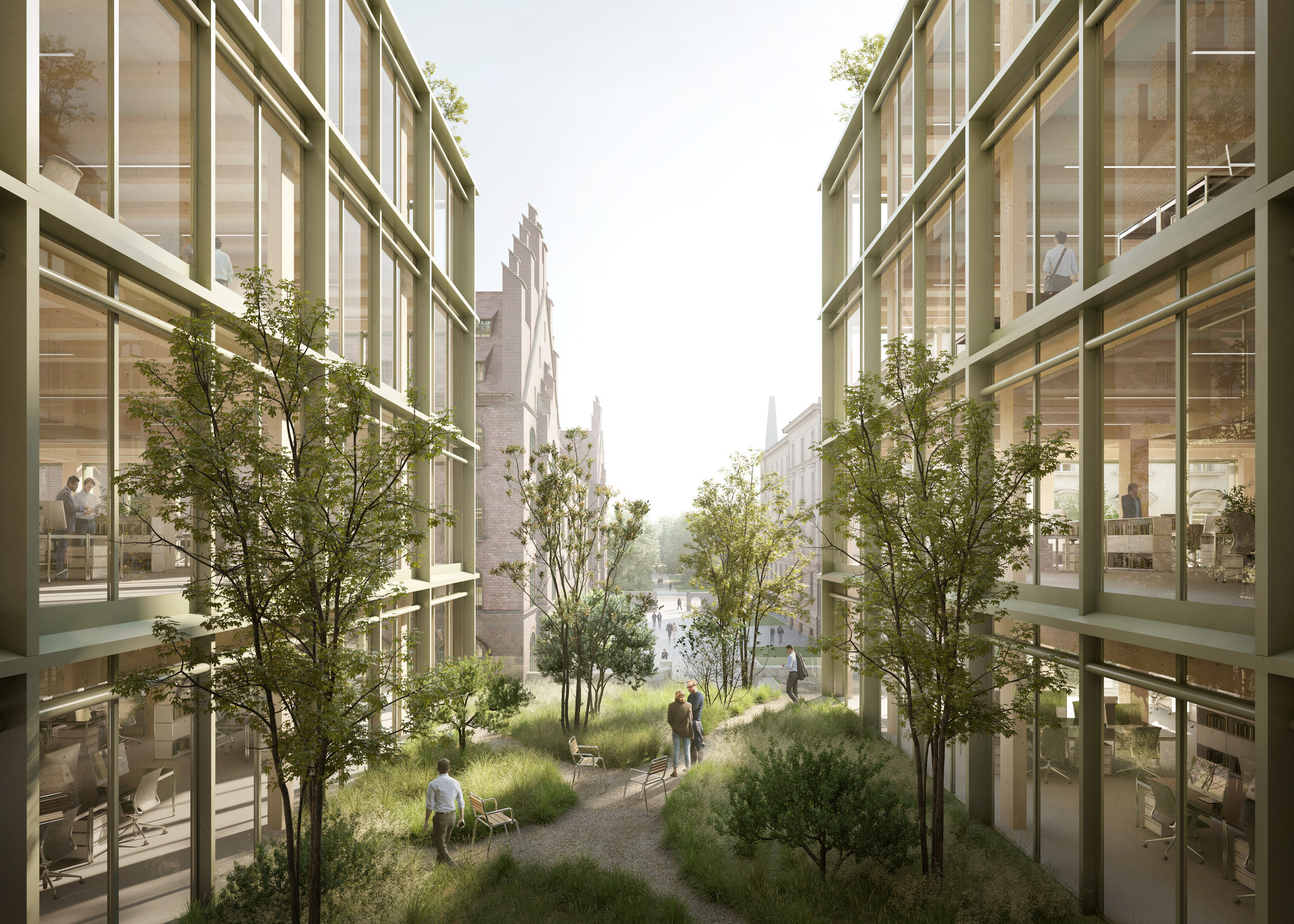
The exposed timber structure creates a healthy indoor climate, while the column grid allows for flexible use of the floor plans. The arrangement of the building volumes and the double-skin glass façade provide every workplace with ample daylight and far-reaching views of the surrounding area.

Sixth floor plan
Due to the applicable German regulatory framework and the associated risks, the 100-metre-high tower could not be realised as a hybrid timber structure and was instead designed as a concrete rib structure. The direct comparison of the two construction methods makes the project an exploration of the possibilities and limitations of hybrid timber construction in high-rise buildings.
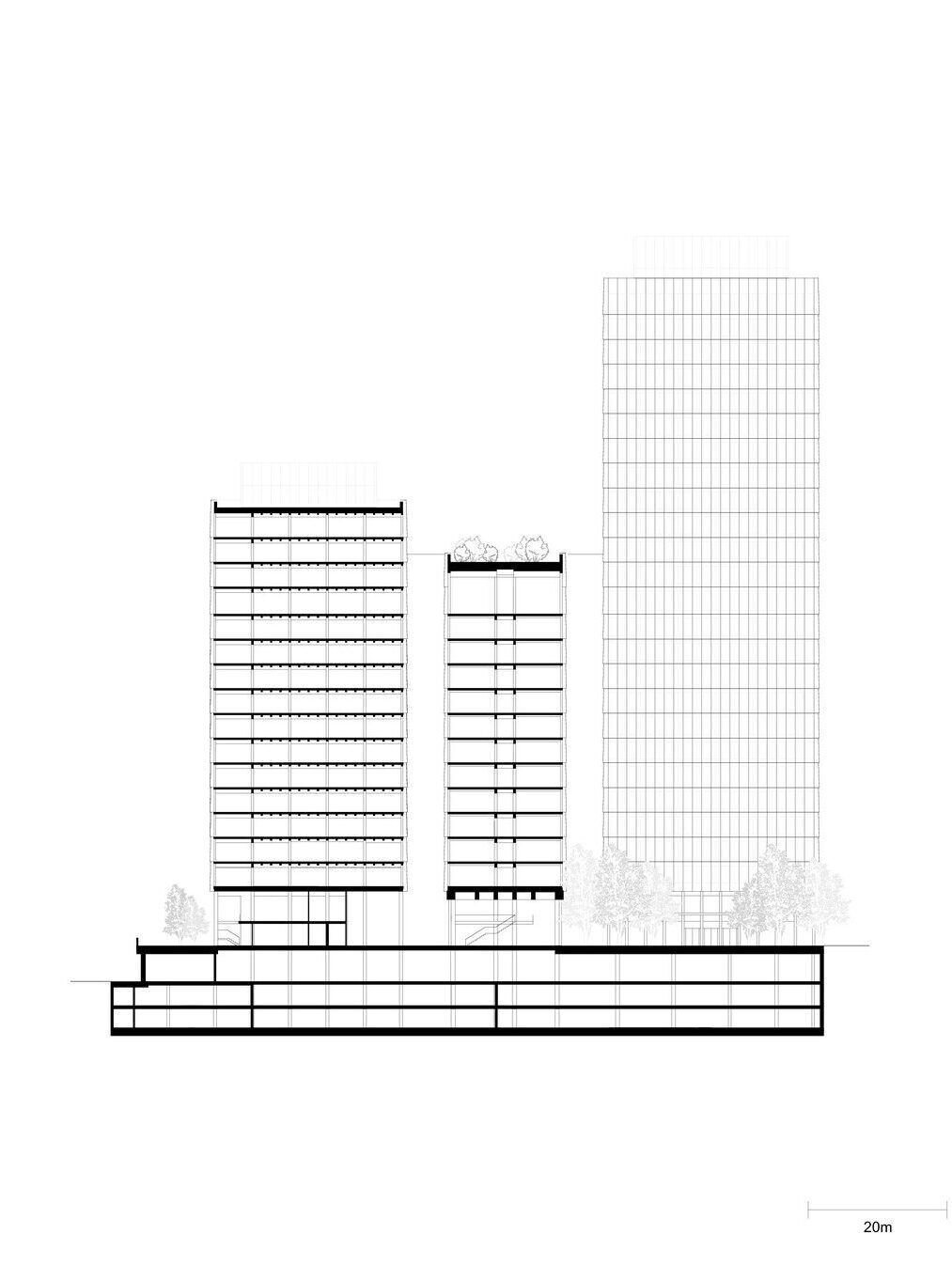
Section through the two hybrid timber buildings
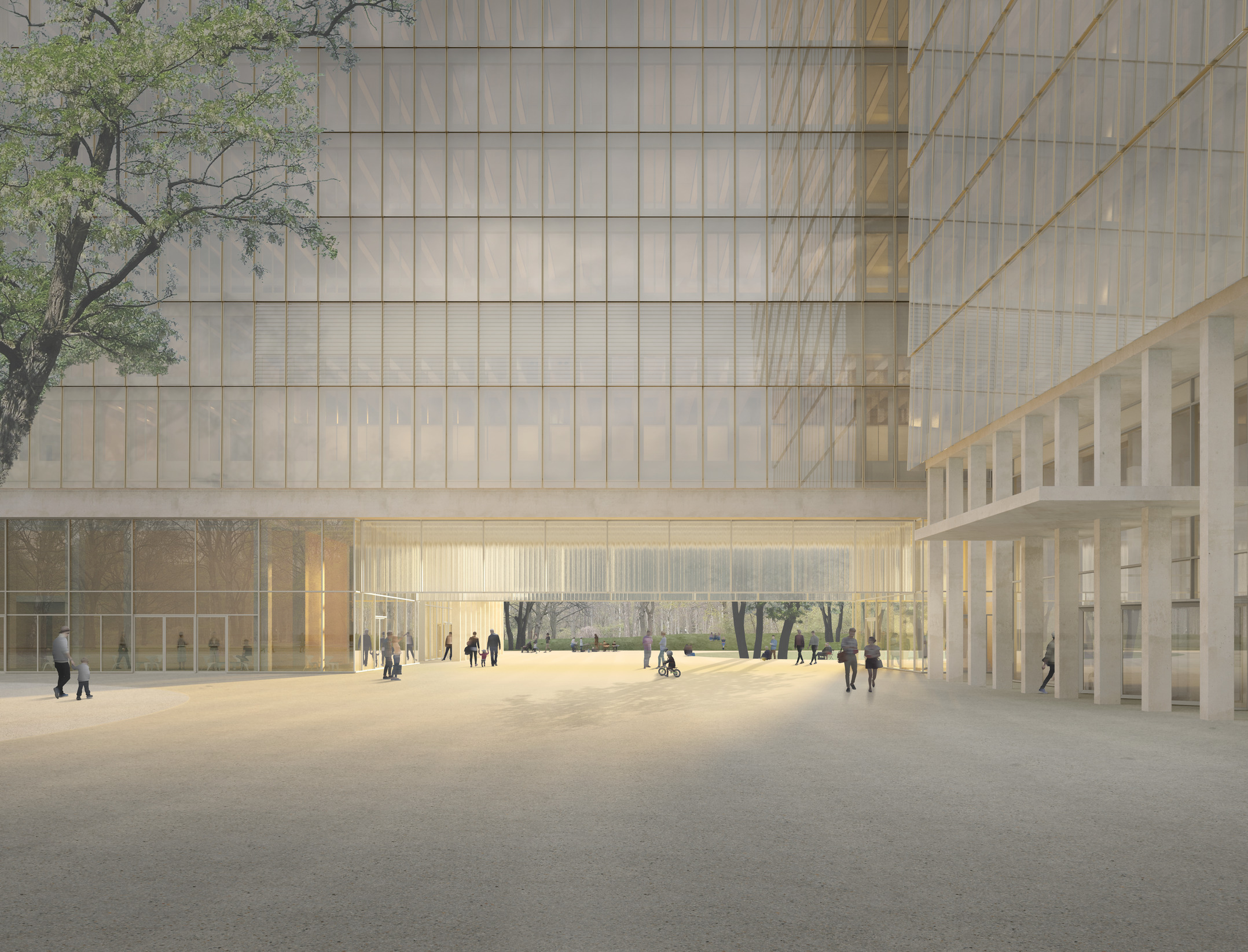
The connection between city and landscape continues in the design of the open spaces. An urban square forms the representative entrance and a place for neighbourly gatherings, while a green square facing the park invites visitors to linger and rest. Gastronomy, fitness and childcare facility enliven the civic realm. A spacious roof garden connected to the company restaurant serves as a social meeting place for staff. A publicly accessible rooftop bar offers panoramic views across the city and the Alps.
Data and credits
- Competition
- 2018–19
- Project start
- 2019
- Construction start
- 2024
- Completion (due)
- 2028
- Gross floor area
- 75,000 m2
- Client
- Strabag Real Estate GmbH, Munich
- User
- Bayerische Versorgungskammer
- Architect
- David Chipperfield Architects Berlin
- Partners
- David Chipperfield, Harald Müller
- Project architect
- Wiebke Ahues (Competition), Nicolas Kulemeyer, Katharina Loges
- Project team
- Markus Bauer, Wolfgang Baumeister, Alexander Bellmann, Thomas Benk, Beate Dauth, Patrick Ehrensberger, Kolja Hein, Theresa Lay, Maximilian Lohmann, Julijana Nikolovska-Steimle, Rosa Piepoli, Maxi Reschke, Joshua Saunders, Julia Schenke, Eva-Maria Stadelmann, Daniel Wendler (Project management), Robert Westphal, Simon Wiesmaier, Hartwig Zehm; Visualisation: Dalia Liksaite, Ken Polster
- Competition team
- Jana Bolten, Ivan Dimitrov, Marius Helten, Enise Kocaman, Nicolas Kulemeyer, Maximilian Lohmann, Katharina Loges, Rebecca Odewole, André Silva Oliveira, Julia Schenke, Kawalpreet Singh; Graphics, Visualisation: Konrad Basan, Dalia Liksaite, Simon Wiesmaier, Ute Zscharnt
- Landscape architect
- Atelier Loidl, Berlin
- Design engineers
- Arup Deutschland GmbH, Berlin
- Project coordination consultant
- Züblin AG, Stuttgart (Technical design to completion)
- Quantity surveyor
- BAL Bauplanungs und Steuerungs GmbH, Berlin
- Services engineer
- Teuber + Viel GmbH, Munich (Concept design),
Planungsgruppe M+P, Dortmund (Developed design) - Building physics
- Müller BBM GmbH, Berlin
- Fire consultant
- Kersken + Kirchner GmbH, Munich (Concept design),
Bauart Brandschutz GmbH , Munich (Developed design) - Acoustic consultant
- Müller BBM GmbH, Berlin
- Facade consultant
- Züblin AG, Zentrale Technik, Munich
- Photography
- Marion Schönenberger