Dunard Centre
Edinburgh, UK
2020–
Located within Edinburgh's UNESCO World Heritage New Town, The Dunard Centre will be the first new performance venue in the city for over 100 years. Containing an almost-1,000-seat auditorium, a café, bar and multifunctional spaces, the building will help reinforce Edinburgh’s position as a cultural capital.
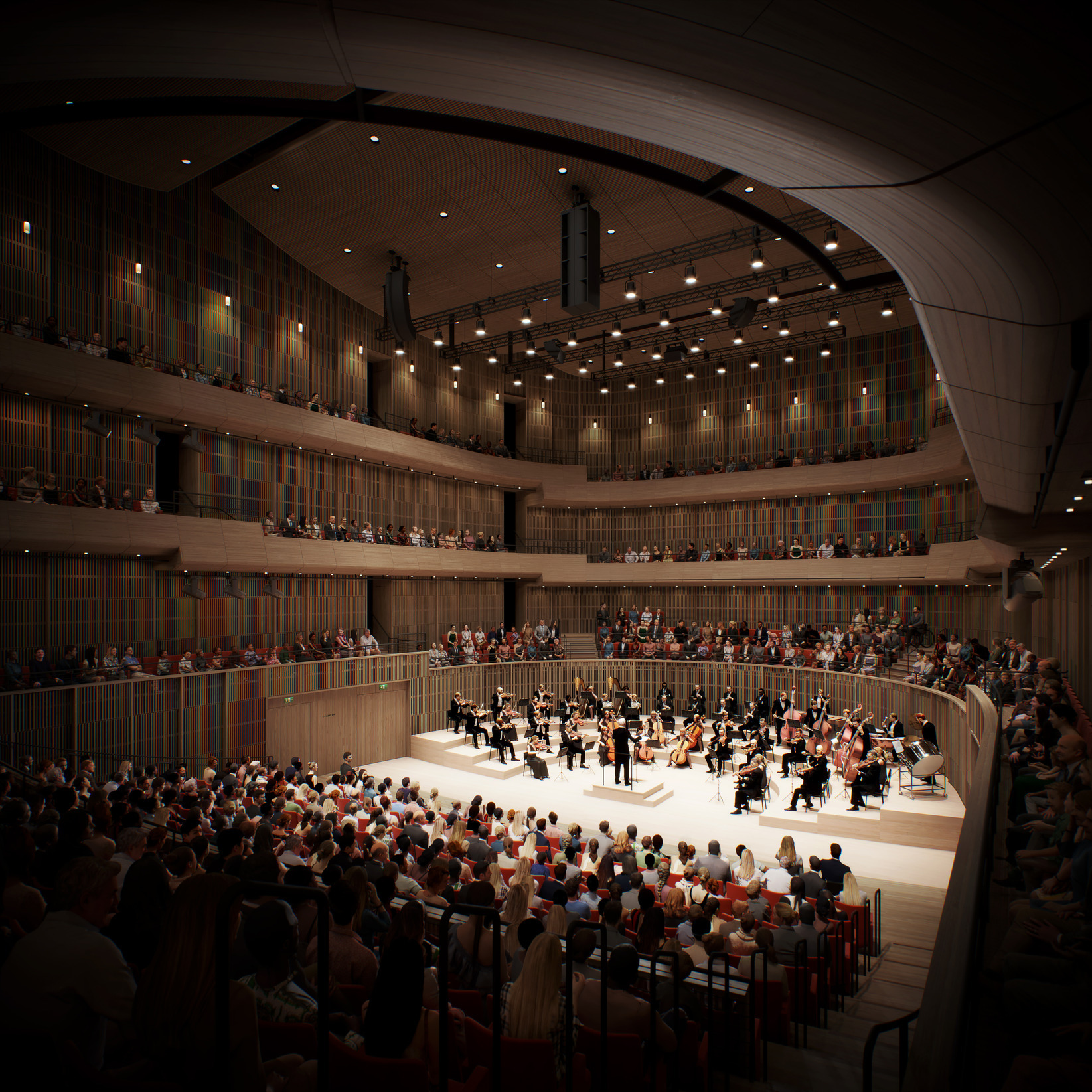
The flexible auditorium serves as a home for the Scottish Chamber Orchestra and will become a key venue for the Edinburgh International Festival, but it is designed to host all types of performances – both acoustic and amplified – ensuring that the venue serves the broader Edinburgh community as a cultural hub. The Dunard Centre will be the first UK venue with acoustic design by Nagata Acoustics, the globally renowned Japanese acousticians.
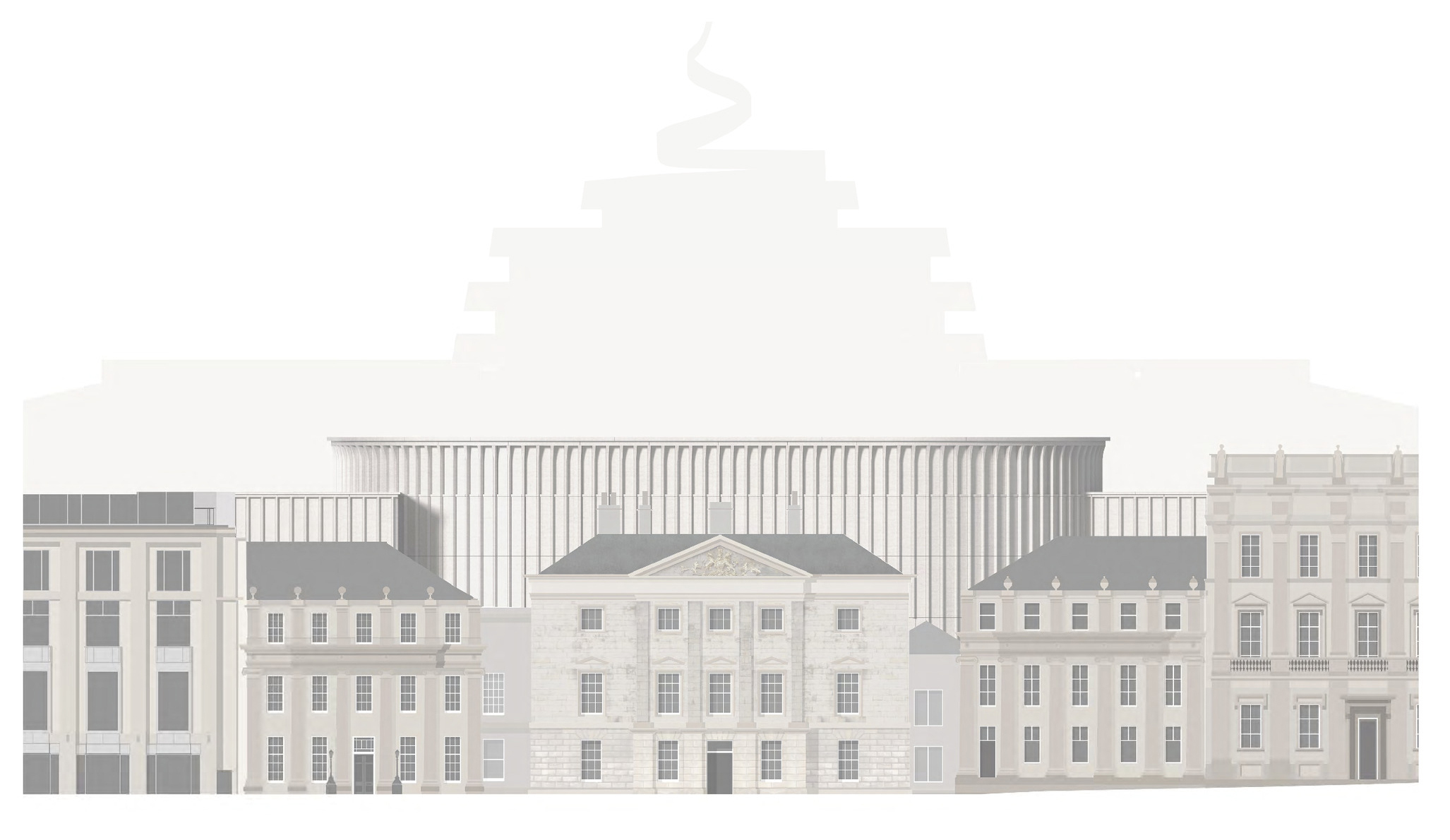
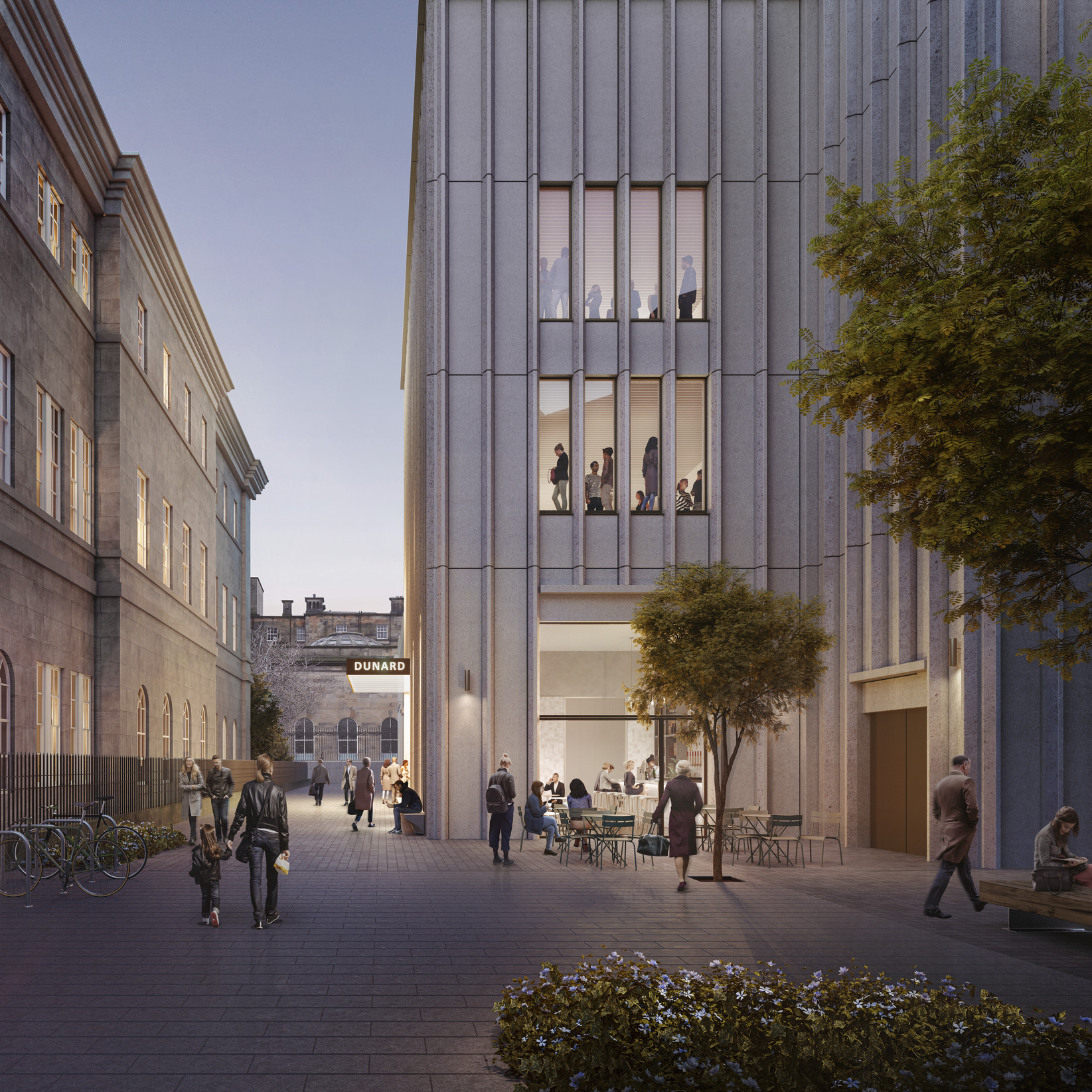
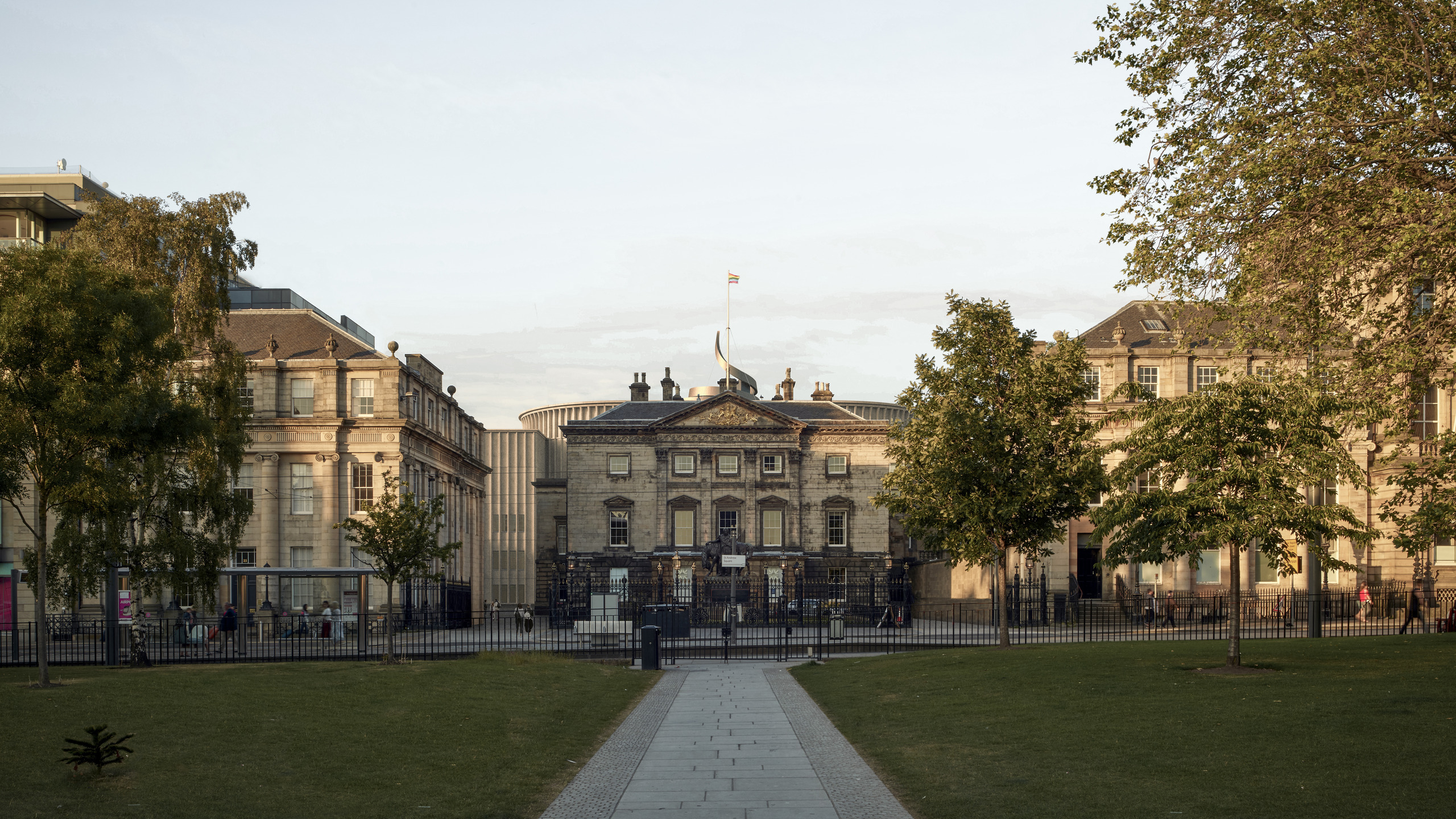
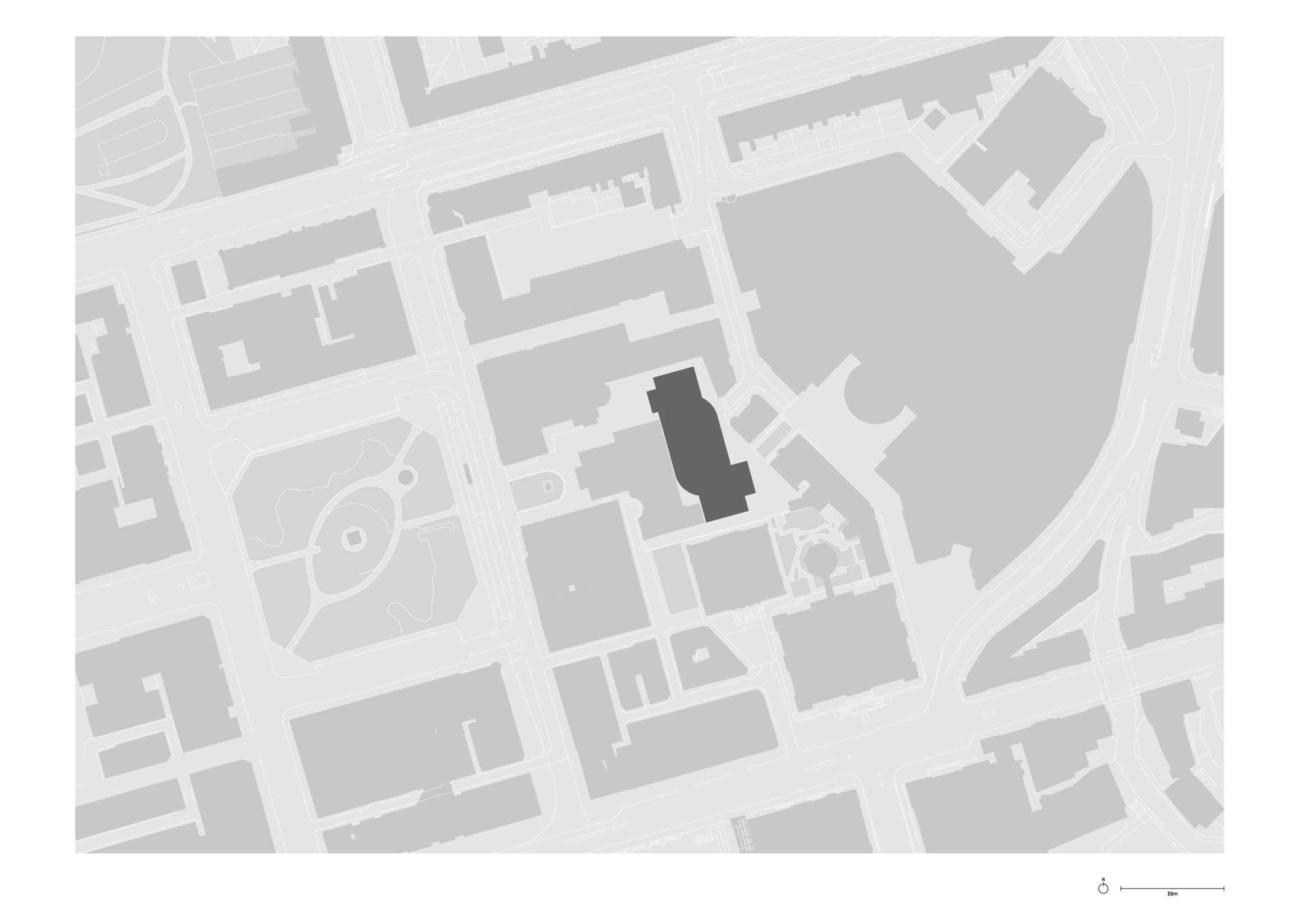
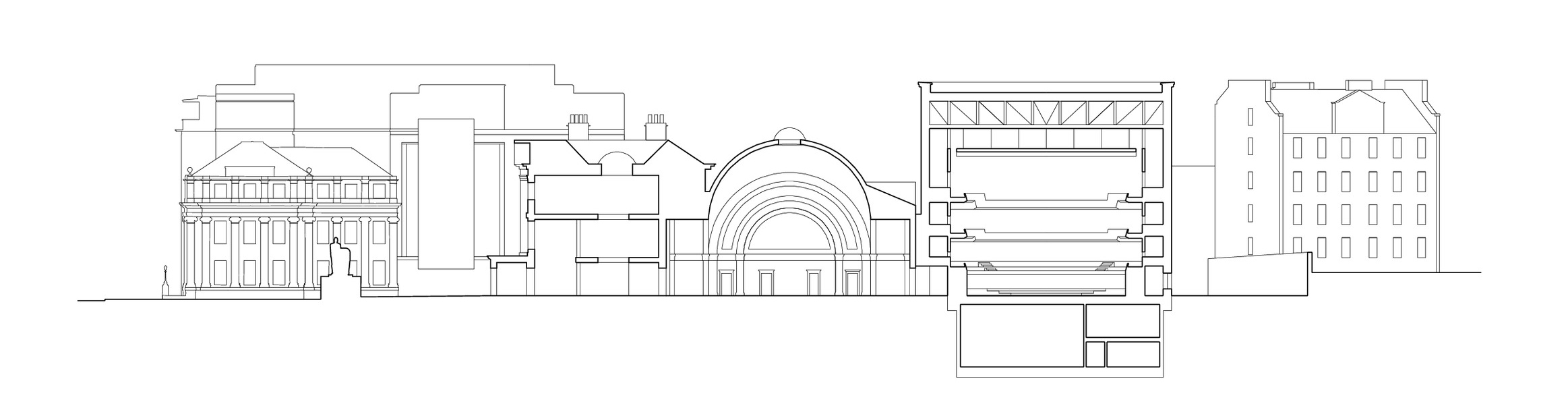
The venue occupies a significant position at the eastern end of George Street – the New Town's principal axis – where a grand public building was originally intended in James Craig's New Town plan. It is set behind, and connected to, the Grade-A listed Dundas House (1771) on St Andrew Square which can serve as a formal entrance for special events. The building resolves the complex urban conditions of its previously concealed location by creating connections through the site and to the multiple entrances. These newly landscaped public spaces link the formal Georgian New Town with the more intimate atmosphere of lanes around Register House (1792) to the south-east.

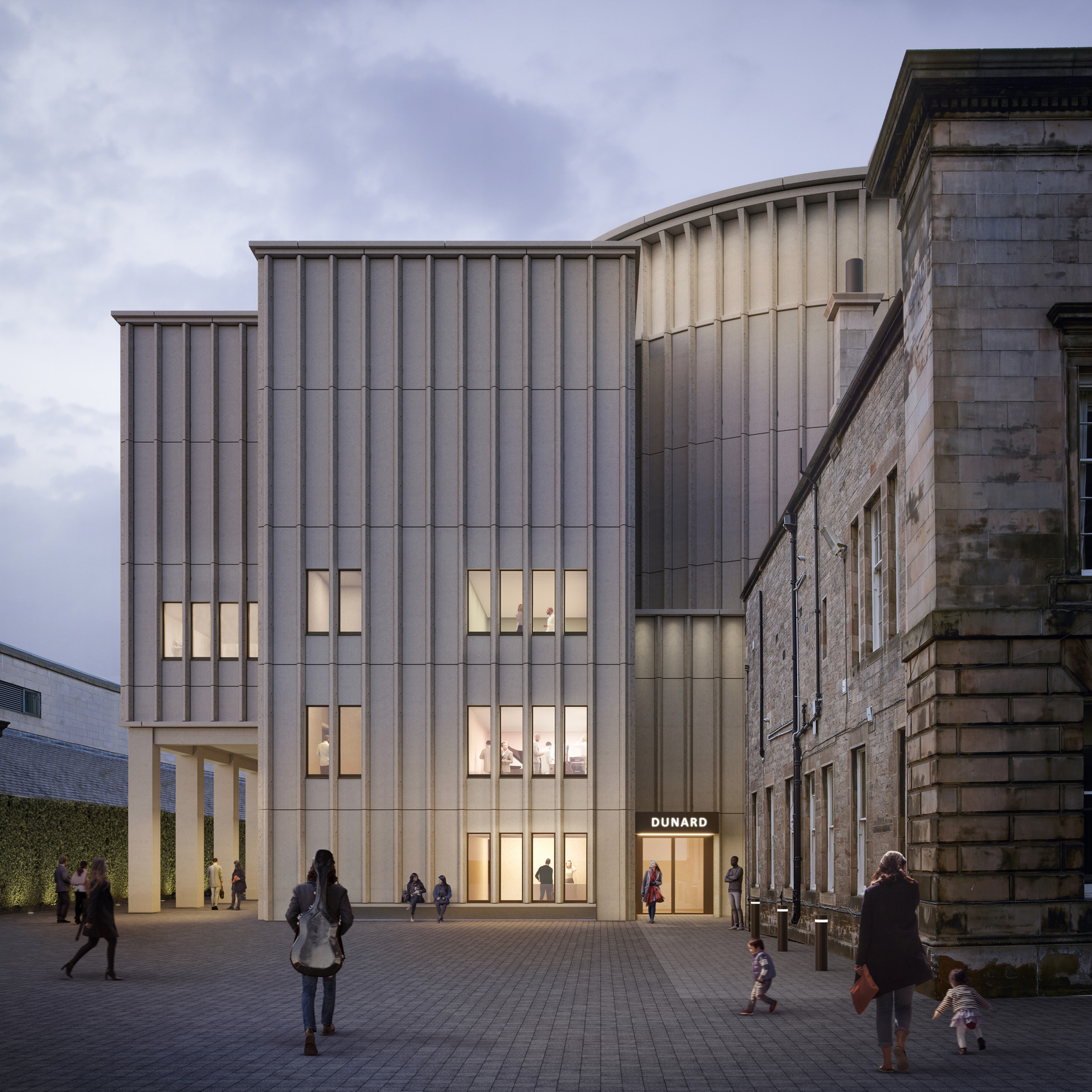
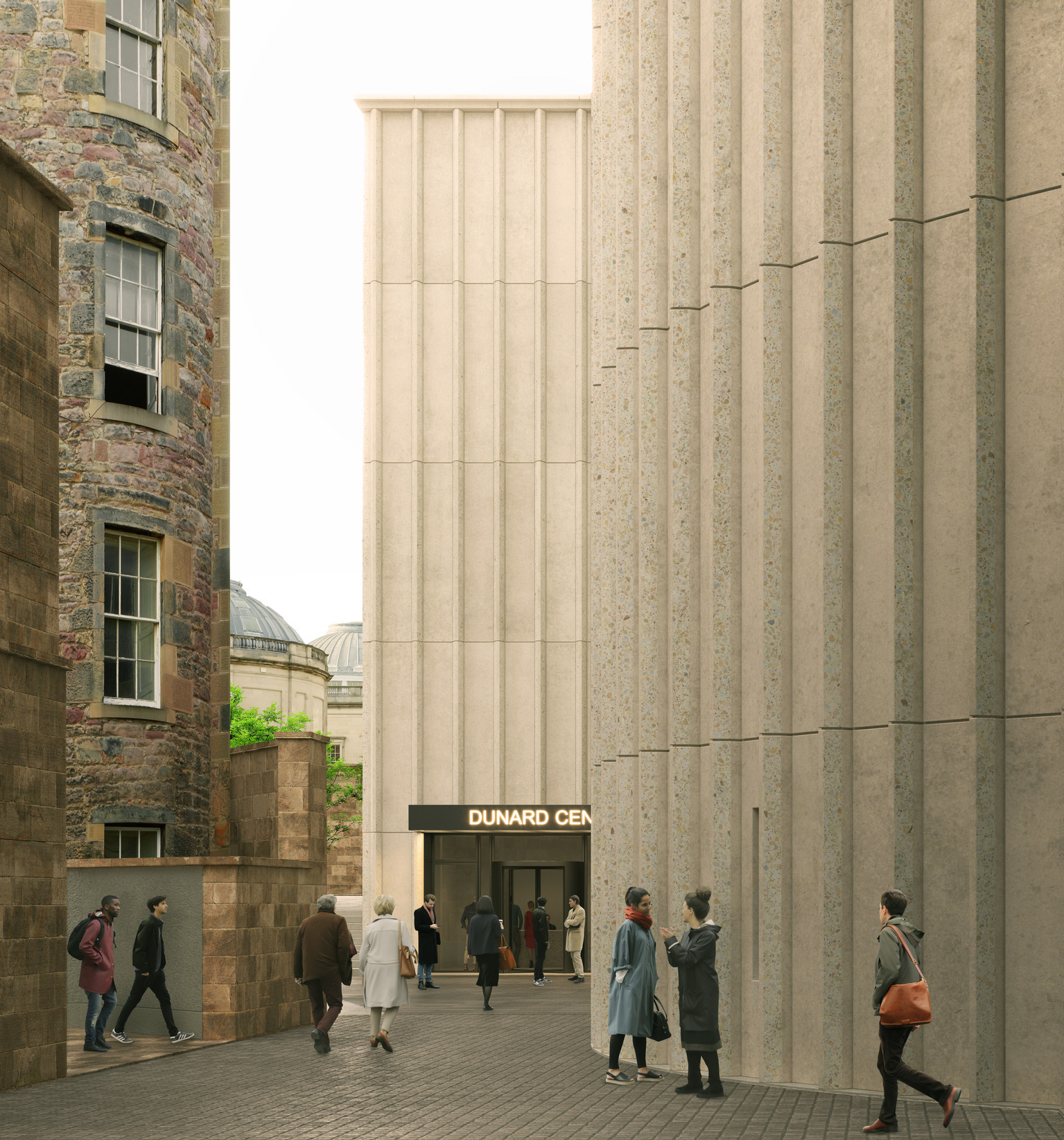
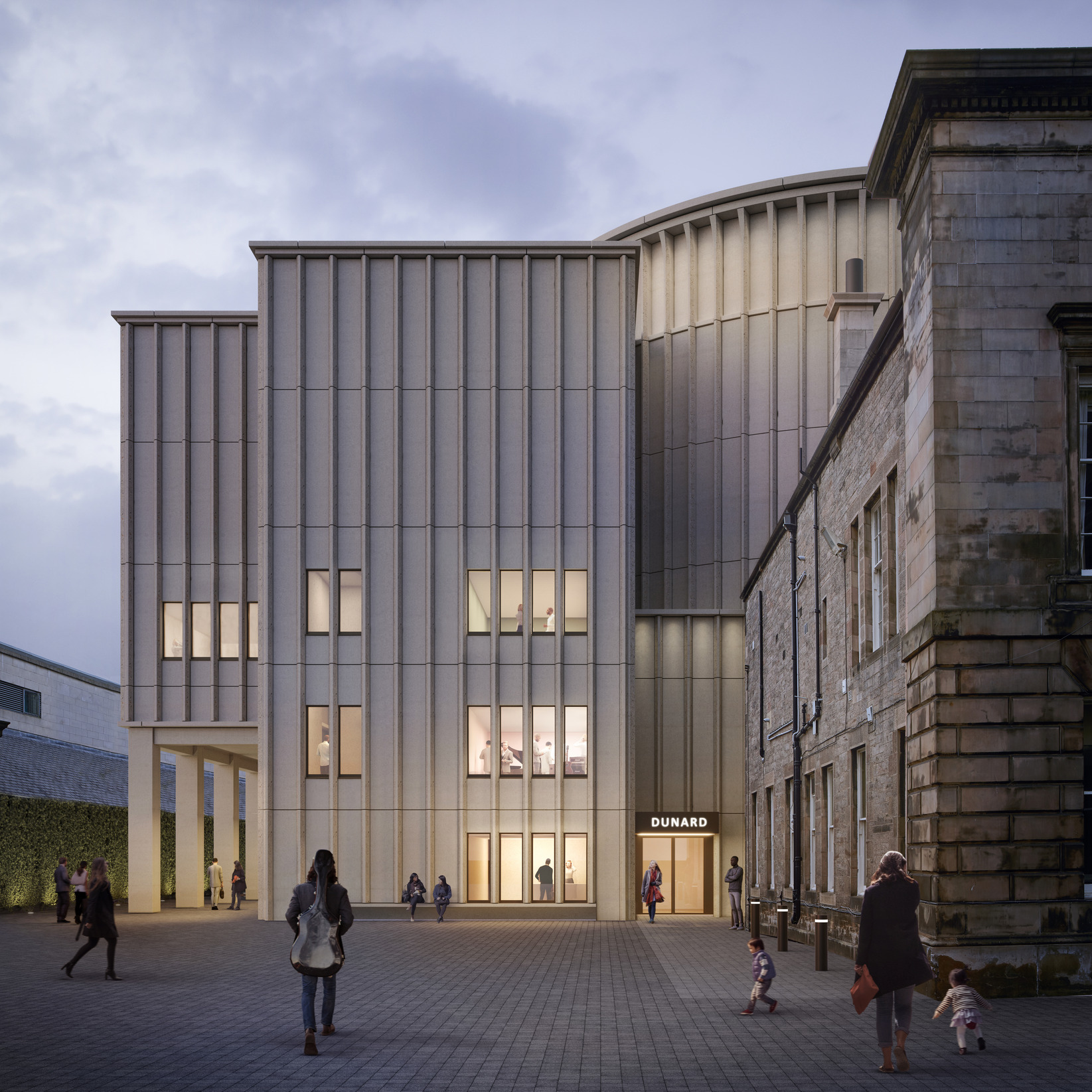
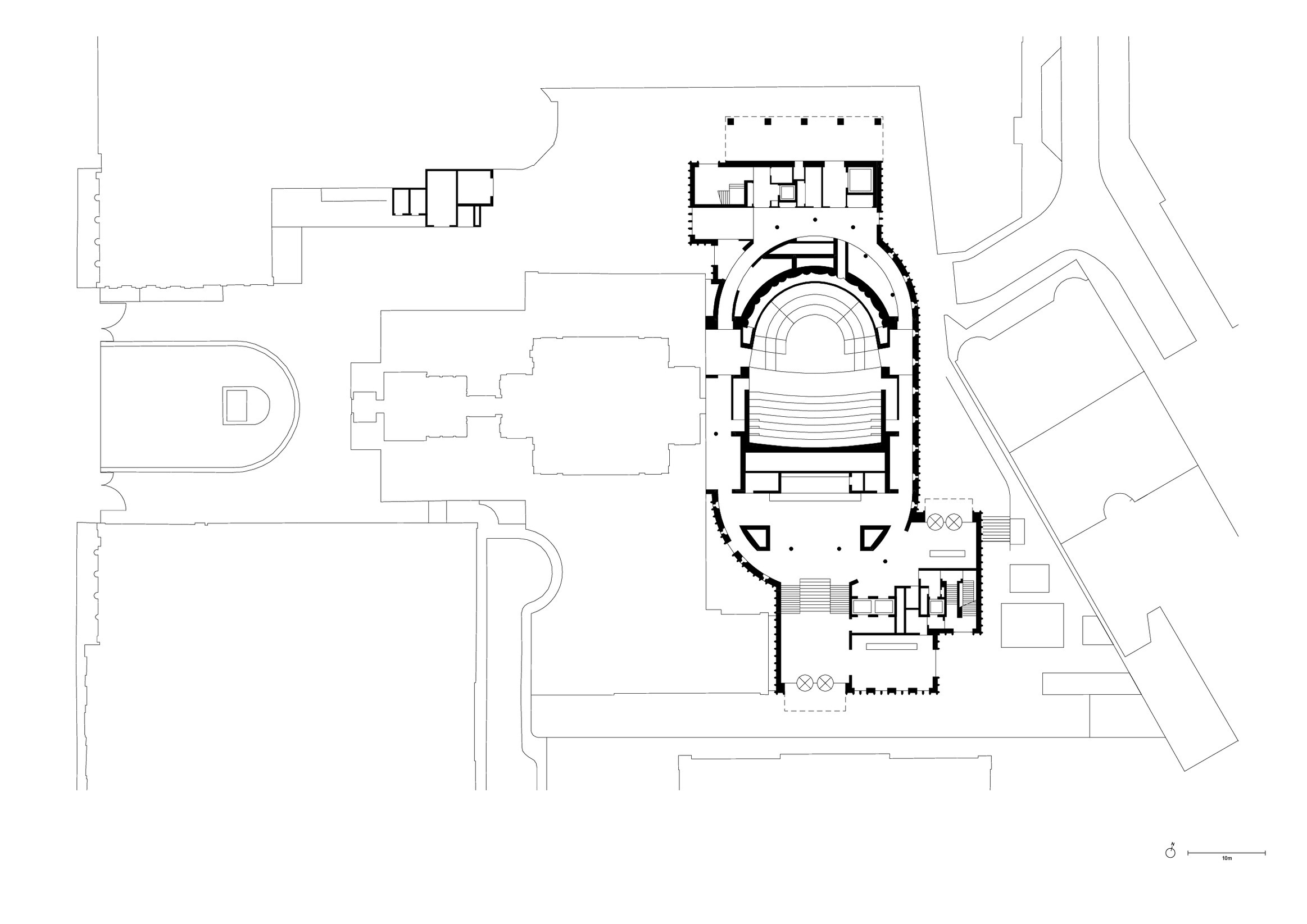
The building’s functions are distributed within three refined yet compact and intersecting volumes. The concert hall sits in the centre, its distinctive geometric form dictated by the acoustic requirements and its position on the site. The hall volume rises above the neighbouring buildings as an urban gesture which terminates the axial view east along George Street, framing Dundas House prominently in the foreground. The venue’s overlapping lower volumes are orthogonal and house its ancillary and public functions. These help to reduce the overall mass of the building and anchor it within the scale, geometry and atmosphere of the surrounding lanes, pocket gardens, and neighbouring buildings.
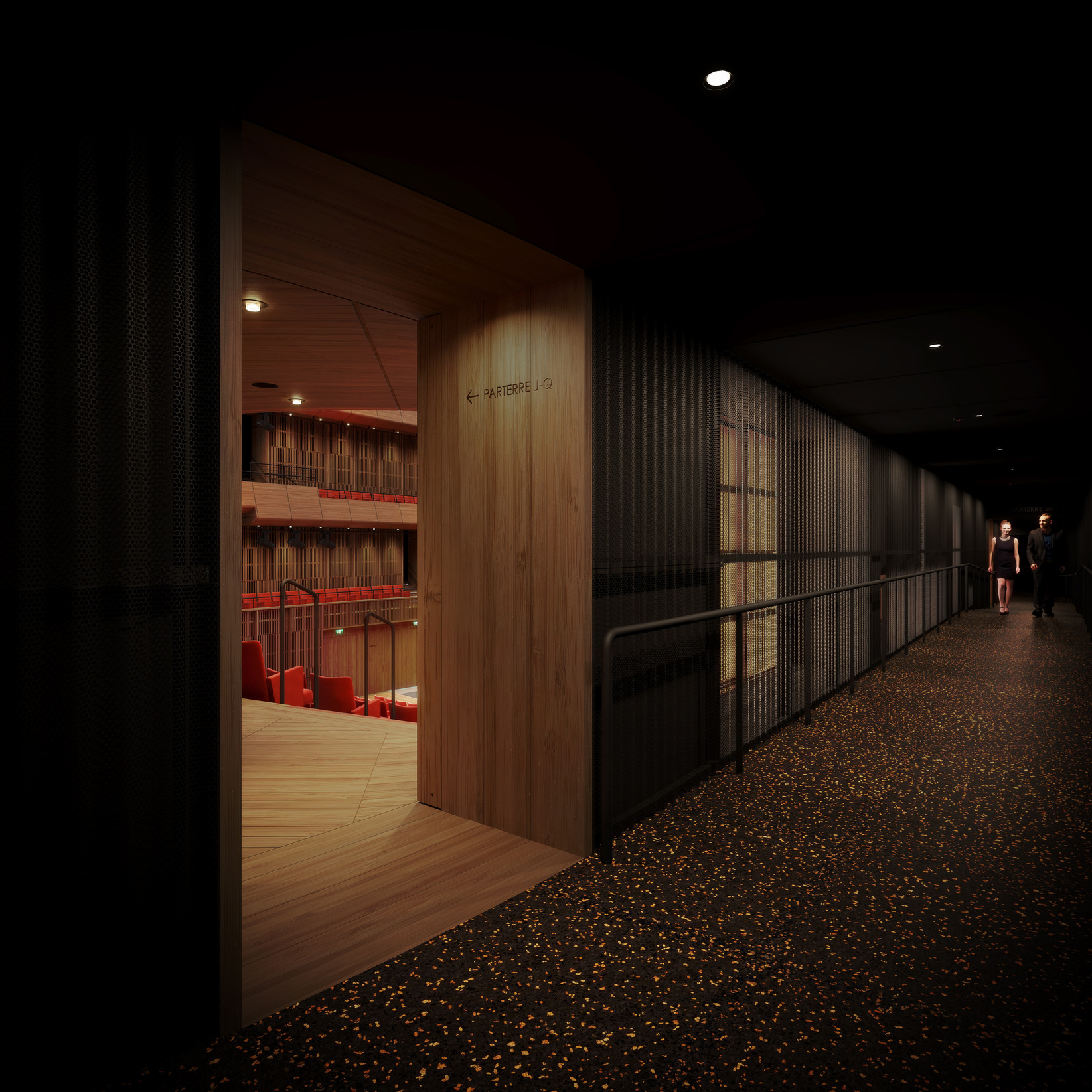
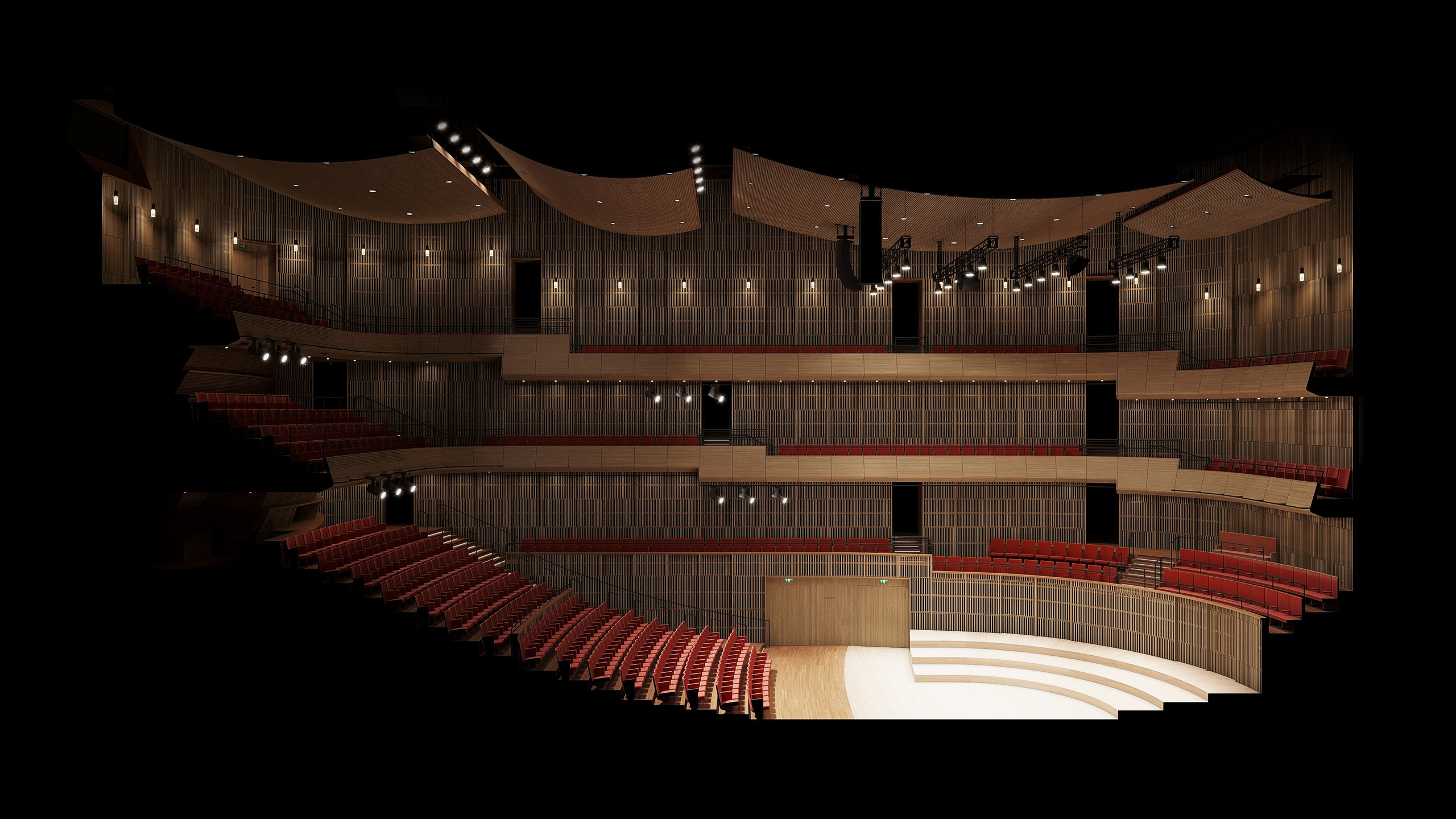
Façades relate to the architecture of the New Town, with the texture and tone of concrete referencing the various sandstones characteristic of the area. Within, the concert hall presents itself as a highly crafted jewel, lined entirely in oak to create an intimate, warm acoustic environment that contrasts with the building's mineral exterior.
Data and credits
- Project start
- 2020
- Construction start
- 2025
- Completion due
- 2029
- Gross floor area
- 7,600m²
- Client
- IMPACT Scotland
- User
- Scottish Chamber Orchestra, Edinburgh International Festival and others
- Architect
- David Chipperfield Architects London
- Partners
- David Chipperfield, Alasdair Graham, Billy Prendergast
- Project architects
- Julia Loughnane, Craig Johnston, Nanami Sakimura, Sophie Roycroft
- Project team
- Ricardo Alvarez, Stefan Costache, Patricia Fredborg, Jochen Glemser, John Han, Peter Jurschitzka, Maria Kabaaga, Graeme Laughlan, Julia Loughnane, Ele Mun, Charlie Proctor, Marco Paffi, Daniela Puga, Kacper Ryske, Juliette Sainlez, Carlo Vincelli, Yuxin Wu
- In collaboration with
- Reiach and Hall Architects
- Acoustic consultant
- Nagata Acoustics (performance space), Sandy Brown (venue)
- Theatre consultant
- Theatre Project Consultants
- AV/IT
- Theatre Projects Consultants (performance space), Atelier Ten (venue)
- Landscape architect
- Gross.Max
- Structural engineer
- Whitby Wood
- Services engineer
- Atelier Ten
- Sustainability consultant
- Atelier Ten
- Lighting consultant
- Atelier Ten
- Fire consultant
- Atelier Ten
- Vertical transportation
- Atelier Ten
- Access consultant
- Buro Happold
- Facade consultant
- Thornton Tomassetti
- Daylight sunlight consultant
- Thornton Tomassetti
- CDM advisor
- Alliance CDM
- Planning consultant
- Ryden LLP
- Project management
- Turner & Townsend
- Quantity surveyor
- Thomson Gray
- Visualisations
- Hayes Davidson, David Chipperfield Architects
- ㅤ
- ㅤ
- ㅤ
- ㅤ
- Project phase 1 (2017–20)
- ㅤ
- ㅤ
- ㅤ
- Project start
- 2017
- Gross floor area
- 12,800m²
- Client
- IMPACT Scotland
- Architect
- David Chipperfield Architects London
- Directors
- David Chipperfield, Louise Dier, Billy Prendergast
- Project director
- Alasdair Graham
- Project architect
- Johannes Feder
- Project team
- Ricardo Alvarez, Freddie Armitage, Matt Ball, Nick Beissengroll, Francis Field, Micha Gamper, Sofia Gozzi, Christopher Harvey, Rory Hughes, Daniel Itten, Craig Johnston, Iga Mazur, Antonio Mazzolai, Matthias Odazzi, Charlie Proctor, Simonpietro Salini, Jana Schwalb, Richard Youel
- Competition team
- Freddie Armitage, Alasdair Graham, Craig Johnston, Matthias Odazzi, Charlie Proctor, Hellmer Rahms, Jana Schwalb
- Executive architect
- Reiach and Hall Architects
- Acoustic consultants
- Nagata Acoustics (performance spaces), Arup (venue)
- Theatre consultant
- Theatre Project Consultants
- AV/IT
- Theatre Projects Consultants (performance spaces), Arup (venue)
- Landscape architect
- Gross.Max
- Structural engineer
- Whitby Wood
- Services engineer
- Arup
- Sustainability consultant
- Arup
- Lighting consultant
- Arup
- Vertical transportation
- Arup
- Fire protection
- Arup
- Access consultant
- Arup
- Façade consultant
- Thornton Tomasetti
- Daylight sunlight consultant
- Thornton Tomasetti
- CDM advisor
- Alliance CDM
- Planning consultant
- Ryden LLP
- Project management
- Turner & Townsend
- Quantity surveyor
- Turner & Townsend, Thomson Gray (Stage 4)
- Visualisations
- Hayes Davidson, David Chipperfield Architects